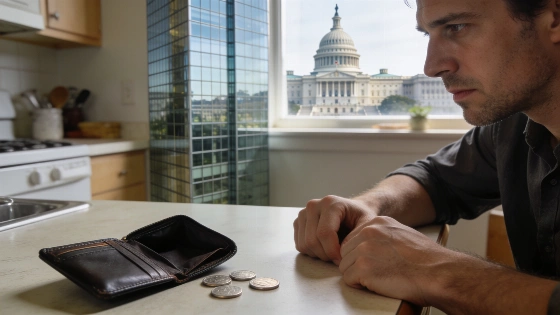
Donald Trump's crypto ventures added billions to his family's wealth while retail investors took heavy losses. The collapse of $TRUMP exposed the conflict between political promotion and private profit.
Reuters estimates that Trump and his children increased their fortunes by at least 2.3 billion dollars through crypto projects after his return to the presidency. Other investors lost an estimated 2.3 billion dollars on the same assets promoted from the White House.
The sharpest example is $TRUMP. The memecoin reached a value above 10 billion dollars before collapsing within hours. Almost one million buyers lost at least 3.81 billion dollars, according to an analysis by Nansen cited by US media. The on-chain research estimated that 988,905 buyers lost money. It also said that a structure linked to the Trump Organization controlled roughly 80% of the token supply.
Nansen’s on-chain analysis put the number of losing $TRUMP buyers at 988,905 and estimated their combined losses at $3.81 billion. Structures linked to the Trump Organization were reported to control about 80% of the token supply.
The asset has since fallen 97% from its peak. It is now valued at 600 million dollars. Reports tracking its market history say it began below one dollar, climbed to approximately 75 dollars and later traded near 2.03 dollars.
Trump still benefited from trading activity. His business received revenue whenever the tokens changed hands. That gap matters.
His income did not depend only on the coin's market value. His companies encouraged activity around the token through exclusive dinners for investors. They also promoted a video game based on his life that used the asset. Bloomberg and other financial reporting have described royalty and licensing arrangements worth hundreds of millions of dollars. Approximately 635-636 million dollars were connected with the meme coin.
Trump's political shift on crypto came after years of scepticism. He had once described cryptocurrencies as a scam. During the 2024 campaign, he presented himself as an industry champion and promised to free it from the policies of Joe Biden's administration.
On September 27, 2026, California Governor Gavin Newsom signed a law banning public officials in the state from issuing memecoins. His office presented the measure as a response to the Trump-coin case and cited losses of more than $3 billion among almost one million buyers alongside roughly $636 million in Trump-related proceeds.
At the same time, his sons founded World Liberty Financial, or WLF. The digital-asset company became one of the most valuable assets connected to The Trump Organization.
The family used partner tokens as a form of strategic reserve. Those purchases often pushed prices higher. The effect soon faded. Bloomberg and Yahoo reporting described WLF as another major source of crypto-related value for the Trump family.
An analysis by Nansen for Bloomberg found that the tokens typically gained between 10% and 26% during the 24 hours after WLF purchases became known. Investors who bought after that rise generally lost money when the crypto market fell. The company then began selling positions. Several announced agreements also stalled and never materialised.
The figures are stark.
Trump's financial disclosure listed more than 520 million dollars from cryptocurrency sales. It listed another 250 million dollars from selling company shares. Separately, he reported 1.4 billion dollars in crypto-related income during the first year of his second term. That total included 635 million dollars from sales of the meme coin through CIC Digital.
Criticism has focused on the losses and on the overlap between public policy and private business. The Center for American Progress said Trump was promoting policies favourable to the crypto industry while creating opportunities for himself and his family.
The Cato Institute also pointed to his pardon of Changpeng Zhao, the Binance co-founder convicted of violating anti-money-laundering laws. Binance was important to the development of WLF's stablecoin.
Trump has continued to court the sector. He held a dinner for more than 200 industry representatives. He issued a 166-page report supporting crypto and met executives from Coinbase and Ripple at the White House. He also backed the Clarity Act, a proposed reform intended to create more favourable rules for the industry. The Senate rejected the text last week.
Online reactions have been blunt. Users describe the presidential coins as a pump-and-dump or rug pull. They accuse Trump of profiting while ordinary buyers lost money.
Those claims are not a legal finding. They do capture the mechanism documented in the available figures. Public promotion lifted attention and trading. The family collected income through ownership and transaction activity.
That pattern is hard to miss.
The contradiction reaches beyond Trump's balance sheet. Paolo Gerbaudo of the Complutense University of Madrid describes populism as a defence of popular sovereignty and the economic interests of ordinary people against elites.
A system that transfers resources from inexperienced investors to a billionaire sits uneasily with that promise. It does so even when the system is presented as a defence of individual freedom.
Crypto began as a challenge to established financial and political power. Under Trump, it has also become a way to concentrate wealth around the centre of political power.
The contrast is visible in the gap between speculative losses and presidential gains. Investment reporting elsewhere tracks where capital ends up, including this earlier investment report.
The evidence points to a business model built on political visibility and private ownership. Trump's policies may still change the rules for the sector. His family has already made money from the attention around those rules.
For retail investors, the lesson is concrete. Presidential endorsement did not protect the assets from collapse. The transactions around them still generated income for their promoter.
The industry's anti-establishment image has collided with a familiar concentration of wealth. In this case, the rebellion against financial power strengthened the fortunes closest to political power.