Google marks its 28th public anniversary in 2026, almost three decades after its incorporation in 1998. More than nine in ten web searches now pass through the platform, which began with borrowed equipment and a Lego-built server.
In August 2026, StatCounter put Google's global search share at about 91.1%. More than nine in ten web searches worldwide now pass through the service. The company began with borrowed equipment and a Lego-built server. It now runs one of the world's most widely used digital ecosystems.
Google officially began operating in 1998 after Larry Page and Sergey Brin created it. The company was formally established on 4 September. Its domain, google.com, was registered on 15 September. Google uses 27 September for its public anniversary, a tradition linked to the search engine's early public availability.
Google’s 2026 anniversary Doodle returned to an early visual style, using nostalgia to connect the company’s current global presence with its beginnings as a small Stanford-linked project.
The company's current size can be seen in the services under its name. Chrome, Android, Maps, YouTube, Gmail and the artificial intelligence platform Gemini all add to its global reach. Google operates under Alphabet Inc. and employs close to 200,000 people worldwide.
The anniversary is also a public corporate event. Reports in 2026 linked the Doodle with Google Store promotions. The celebration joins company history with commercial activity.
Its early infrastructure looked very different.
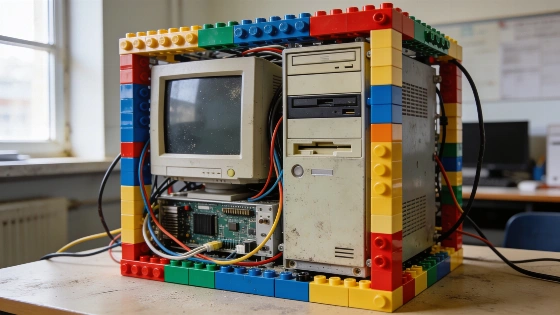
In 1995, the founders had limited financial and technical resources. They combined old computer components with equipment borrowed from Stanford University to build the platform's first server. Lego pieces formed the structure around it. That improvised setup became part of the story behind a service built to organise the huge amount of information appearing on the internet.
The 27 September celebration should not be confused with the company’s legal founding date. Google was incorporated on 4 September 1998, but 27 September became the date used for its public birthday and annual Doodle tradition.
The project had another name at first. It was called BackRub because its central system relied on PageRank. The name referred to the way the algorithm assessed links between pages. The founders later adopted google as a variation of googol, a number followed by 100 zeros.
The first recorded searches also point back to the company's university roots. In 1996, the service still used Stanford's academic domain. The first page crawled by the algorithm was the university's own website. After the commercial domain went live on 27 September 1998, the first term entered into the search box was "Gerhard Casper", the name of Stanford's president at the time.
That was the starting point.
A university-based experiment became a search service used for more than nine out of every ten web queries. It also expanded into mobile software, mapping, video, email, browsers and artificial intelligence. Current anniversary coverage continues to place Page and Brin's Stanford years at the centre of the origin story.
Google's anniversary records more than the survival of a technology brand. It tracks the growth of a platform that moved from improvised hardware to the centre of everyday internet access. StatCounter's search-share figure, the company's global workforce and its expanding service portfolio point to the same conclusion. Google's defining achievement is not simply that it has lasted since 1998. Its original search mission still anchors an enormous technology empire.