Robotic exoskeletons weighing just two kilos are now leaving hospital labs and appearing on hiking trails. With sensors and motors, these devices promise to assist movement for ordinary users. The shift marks a new phase for wearable robotics, but questions remain about safety and real-world impact.
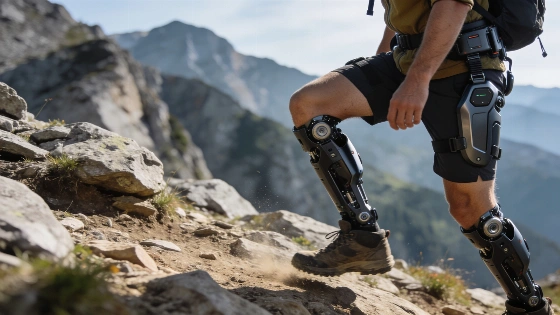
Hikers on steep mountain paths are starting to see a new kind of gear: robotic exoskeletons weighing as little as two kilos, built not for patients but for anyone who wants a little extra help outdoors. These lightweight exosuits are now reaching consumers, a change highlighted by Nature in August 2026.
Exoskeletons were once limited to medical rehab, helping people recover from strokes or spinal injuries. That line has blurred. Companies like Hypershell and Skip now sell or rent devices aimed at healthy users who want to make walking, running, or climbing hills less tiring. The Hypershell X, for example, delivers 400 watts of power, a 15-kilometer battery range, and weighs just two kilos, priced at $899. The company is clear: this is not a medical device. Users need to be able to walk and balance on their own.
In September 2026, Hypershell announced the Halo, a full-leg exoskeleton with four motors and a peak power of 1,490 watts, priced at $2,299, with deliveries scheduled for November.
Skip’s MO/GO system takes a different route, building motors and sensors into hiking trousers. The company claims up to 40% extra push on climbs and knee support on descents, with three hours of strong assistance per charge. Like others, it is not classified as medical equipment, and rentals are available for those who want to try before buying.
What makes these new exoskeletons different is that they help without taking over. The user stays in control, and the device gives targeted support instead of replacing natural movement. Research published in Nature in 2024 showed a neural network system that could estimate hip and knee effort in real time, adapting instantly across 28 activities. In ten of those, the system reduced metabolic or joint workload by 5.3% to 19.7%, all without manual adjustments.
Field trials are adding more data. The WalkON exotraje, a soft robotic suit, helped young adults use 17.79% less energy during a 500-meter uphill walk. In older adults on a 400-meter outdoor track, the average reduction was 10.48%, and users said they felt in control of their movements. Another study from July 2026 found that a soft hip exosuit let seniors aged 69 to 85 complete nearly two extra sit-to-stand repetitions per minute, while lowering the metabolic cost of walking by 13.6%. Still, researchers warn these are small studies and not enough for broad medical advice.
The Hypershell X series now includes multiple models such as X Pro, X Pro S, X Ultra S, and X Max S, reflecting rapid commercial development and segmentation by power and price. The X Ultra model, for instance, is certified by TÜV and SGS, offers up to 20 km of assisted range, a 72 Wh battery, and weighs about 2.5 kg without battery or mounts.
Commercial claims and scientific results do not always match. Manufacturers advertise power, range, and boost, but these numbers are not guaranteed for every user or every trail. Real-world experience depends on fit, battery life, and how the device handles unexpected movements or stumbles. Safety and adaptability are still open questions, especially as these systems leave controlled labs for unpredictable outdoor settings.
Researchers at Georgia Tech point to ongoing problems with sensor accuracy, safety protocols, and the need for better training data. These challenges are familiar from other robotic fields, like construction, where machines must adapt to changing conditions. As with the changes seen in bumblebee colonies when the queen disappears, described in a recent report, the move from specialized tool to everyday companion is rarely smooth.
Robotic exoskeletons have finally made it out of the lab and onto the trail, but whether they become standard gear will depend on more than battery specs or marketing. These devices will need to prove they can deliver comfort, reliability, and real usefulness in the messiness of real life. For now, the technology is promising, but there are still open questions about who benefits and how far it can go before it hits limits in everyday use.