A mother and daughter injured by a collapsing wall in Roda de Berà are still in critical condition. The local council mistakenly reported their removal from life support. The storm caused major damage across Costa Dorada.
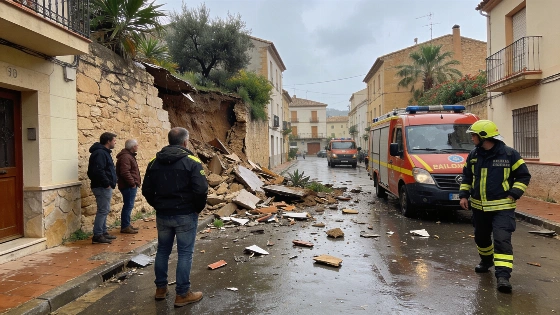
The aftermath of Saturday's severe storm in Roda de Berà (Tarragona) has left two women—a mother and her 18-year-old daughter—fighting for their lives in hospital. Both remain in critical condition, according to the Department of Health, after a wall from a nearby house collapsed on them as they rested following their work at the local night market. The incident has drawn attention not only for its tragic outcome but also for the confusion caused by an erroneous statement from the local council.
On Tuesday, the Ayuntamiento of Roda de Berà mistakenly announced via social media that the two women had been disconnected from life support. This information was quickly denied by the Department of Health, which confirmed that both victims continue to receive intensive medical care. The mayor, Pere Virgili, clarified that the women belong to a family of market vendors who had just finished packing up their stall when the wall gave way due to the intense rainfall.
The storm, which struck several municipalities along the Costa Dorada, resulted in significant property damage and left a total of 11 people injured, including the two women now in critical condition. The worst-hit areas included Torredembarra, El Vendrell and its coastal district Coma-ruga, Roda de Berà, Creixell, and Altafulla. Despite the scale of the event, the regional government did not issue an Es-Alert, citing that the meteorological alert level did not warrant such a warning. Local mayors, including those from Roda de Berà and El Vendrell, have since called for structural measures to prevent the railway line from blocking water flow during heavy rains, but stopped short of criticizing the absence of an alert, acknowledging the difficulty in predicting the storm's intensity.
The Generalitat has defended its response, stating that decisions were made collectively and based on technical criteria. Meanwhile, opposition parties in the Catalan Parliament have demanded that Interior Minister Nuria Parlon explain the reasons behind the lack of public warnings. The debate over emergency communication echoes similar controversies seen in other disaster responses, such as the recent earthquake crisis in Colombia, where delays and miscommunication complicated rescue efforts.
Spain's emergency alert system, Es-Alert, is designed to notify residents of imminent threats via mobile phones, but its use is strictly regulated and depends on official risk assessments. The events in Tarragona have reignited discussions about the adequacy of current protocols and the need for improved infrastructure in flood-prone areas. As of now, the two women remain under close observation, and the community awaits further updates on their condition. The incident highlights ongoing challenges in disaster preparedness and the importance of clear, accurate communication from authorities during emergencies.