TVE’s morning programs have posted sharp, sustained audience gains this season. Industry insiders question the legitimacy of these figures. The unexplained jump has triggered debate over possible manipulation of audience measurement.
Spanish public broadcaster Televisión Española (TVE) is facing scrutiny after its morning programs recorded an abrupt and sustained rise in audience share during the 2025–2026 season. The surge, which began in spring 2025, has left industry professionals questioning the integrity of the audience measurement system, as reported by ABC. The increase was first noticed when TVE hired Javier Ruiz for 'Mañaneros 360' in April 2025, with the show immediately taking the lead in its time slot. Silvia Intxaurrondo’s 'La hora de la 1', airing just before, also saw an even sharper climb. Both programs consistently outperformed their private competitors, a pattern not previously observed in Spanish television.
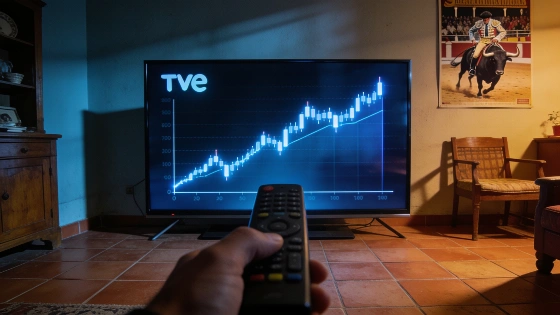
According to restricted microdata from Kantar Media (now Fifty5Blue), TVE’s morning audience share jumped by three to six points within a few months, a shift that industry executives describe as highly irregular. For example, 'Mañaneros' moved from around 9% in March 2025 to over 12% by June, while 'La hora de la 1' soared from 13% to nearly 20% in September. These gains were especially pronounced in regions like Madrid, where the political landscape would not typically favor TVE’s programming. On September 16, 2025, 'La hora de la 1' reached a 28.4% share in Madrid, compared to 15% the previous year, with 'Mañaneros' also doubling its numbers.
The audience measurement system in Spain relies on a network of audimeters installed in randomly selected households, with the exact number and distribution kept secret. While some sources claim there are 40,000 devices, most estimates put the figure closer to 6,000 nationwide. The system’s opacity has fueled speculation about possible interference. Industry insiders suggest that manipulating even a small number of audimeters—by setting them to TVE and marking the maximum number of viewers—could disproportionately inflate ratings, especially during low-consumption morning hours. However, such tampering is widely considered impossible under normal circumstances.
Despite these doubts, the pattern of TVE’s audience growth has persisted. After the summer of 2025, both 'La hora de la 1' and 'Mañaneros' consistently led their time slots, a reversal from previous years. The phenomenon intensified in autumn, with TVE’s morning shows regularly outperforming rivals like 'Espejo Público' and 'Ana Rosa'. Notably, the highest ratings for 'La hora de la 1' coincided with a technical blackout in the studio, further deepening the mystery. Theories circulating among private broadcasters include the possibility of government influence over Kantar Media, potentially involving the strategic placement or manipulation of audimeters to favor TVE. One executive, quoted by ABC, expressed certainty that manipulation was occurring but admitted to not understanding the method.
TVE has used its ratings success to justify expanding its info-entertainment lineup, bringing in new programs and presenters. The broadcaster has also highlighted its audience gains in news segments and internal communications. Meanwhile, Kantar Media/Fifty5Blue has declined to comment on the situation, maintaining strict confidentiality around its methodology and data. The debate over TVE’s ratings comes amid broader discussions about media plurality and government influence, echoing recent political disputes over the role of television in shaping public opinion. For context, Spain’s government has also been active in other areas of social policy, such as the recent push for dependency and disability reform, which was covered in detail in a recent report on key legislative changes.
Audience measurement in Spain is a critical factor in the allocation of advertising revenue and the perceived success of television networks. The reliability of Kantar Media’s system has long been a subject of debate, given its lack of transparency and the significant financial stakes involved. TVE’s recent ratings surge, particularly in politically significant regions like Madrid, has intensified calls for greater oversight and clarity in how audiences are measured. The situation remains unresolved, with industry observers awaiting further developments and potential responses from both broadcasters and measurement firms.