The US has spent nearly 40 billion dollars on the war with Iran. Missile reserves are running low and inflation is rising. Trump’s claims of victory clash with mounting costs and voter frustration.
The war with Iran has left the Pentagon struggling to rebuild its missile stockpiles. Costs are nearing 40 billion dollars, and there’s no clear end in sight. With the November midterm elections approaching, President Donald Trump faces a growing problem: the military’s reserves are running low, raising concerns about both national security and his political future.
By August 1, congressional data put direct US spending on the conflict at over 38.1 billion dollars. Each month adds another 2 to 3 billion. The Pentagon has asked Congress for an emergency 90 billion dollar budget, with 70 billion set aside for war expenses, but lawmakers have yet to approve it.
"The Congressional Budget Office warns that restoring depleted missile interceptor stocks could take at least five years, highlighting a long-term vulnerability for US defense."
— Congressional Budget Office
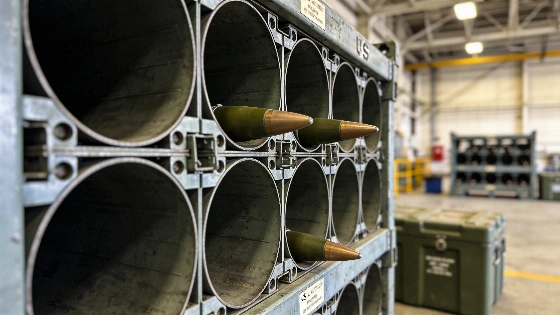
The most urgent issue is the rapid depletion of missile interceptors. The Congressional Budget Office (CBO) estimates that more than half of the war’s cost so far—about 21.7 billion dollars—has gone to restocking ammunition, including 13.1 billion for interceptors. Since June 2025, the US has used up between half and two-thirds of its stocks of Patriots, THAAD, Standard Missile 3, and Standard Missile 6. Rebuilding these reserves could take five years or more. Each Patriot interceptor costs four million dollars. Lockheed Martin, which makes them, produced 620 units in 2025 and plans to increase output to 2,000 per year.
Iran has taken advantage of this weakness. Its recent attacks have forced the US to use far more interceptors than planned. In one week, Iran fired over twenty missiles at US bases in Jordan, damaging the Muwaffaq Salti air base and prompting American forces to launch dozens of interceptors—twelve THAAD and up to seventy Patriots, according to the Wall Street Journal. In just a few hours, the US used a fifth of the Patriots that Ukraine’s President Volodymyr Zelensky says his country needs for winter defense.
The CBO’s report is grim for the White House. The war, started by the US and Israel on February 28 to force regime change and stop Tehran from getting nuclear weapons, has not met its stated goals. Trump insists the main objective—opening the Strait of Hormuz—has been achieved and says the conflict will end after the midterms. But the fighting continues. Iran’s attacks have become more precise and intense, possibly with help from Russian satellites, and its Houthi allies in Yemen now threaten to close the Bab el Mandeb strait, another key oil route.
"Multiple major media outlets, referencing July congressional hearings, report that the Pentagon is urgently seeking approximately 90 billion dollars in emergency funding, with the majority intended for munitions and stockpile replenishment. However, approval of this request has been delayed in Congress, underscoring the political and logistical challenges facing US defense planning."
— Reuters and other leading media
The Pentagon’s inspector general has confirmed that the war has caused "shortages in strategic inventories" and exposed "bottlenecks in the industrial base for ammunition resupply." The report urges the Department of Defense to speed up procurement and production, and to stockpile critical materials and munitions for future crises. Iranian attacks have damaged or destroyed hundreds of buildings and facilities at US bases across Kuwait, Bahrain, Qatar, the United Arab Emirates, Saudi Arabia, Iraq, Oman, and Jordan. Dozens of aircraft have also been lost or damaged.
Despite this, Trump and Defense Secretary Pete Hegseth deny any shortage of munitions. Trump has repeatedly claimed on social media that the US has an "almost unlimited" supply of missiles and that production is at record levels, especially for Patriots, THAAD, Tomahawks, and other systems. The CBO notes that its cost estimates may be incomplete because the Pentagon has not provided all requested data, so some figures rely on public sources. The full cost of damage to US bases in the Middle East is also unclear for the same reason.
The financial strain is now reaching ordinary Americans. Rising war costs are fueling inflation and pushing up gasoline prices, which in turn raise household bills. The CBO projects that the conflict will add half a percentage point to inflation in the first quarter of 2027, mainly because of high hydrocarbon prices from the closure of the Strait of Hormuz and possibly the Red Sea. The war has also added two-tenths of a point to short-term interest rates compared to pre-war forecasts.
Trump, eager to end a widely unpopular conflict that could cost him control of Congress, continues to blame rising fuel prices on Ukraine’s attacks on Russian refineries, insisting the Persian Gulf situation is unrelated. But the numbers point elsewhere: the war’s financial and strategic costs are growing, and the Pentagon’s ability to respond to new crises is being eroded by the steady drain on its arsenals. As the election nears, the administration’s claims of victory sound increasingly hollow against the reality of empty missile silos and rising public frustration. The US now faces a hard truth: its military and economic resources are stretched thin, and the effects will last well beyond election day.