Thousands of teachers in Valencia report salary deductions for more strike days than they participated in. The STEPV union is preparing formal complaints. The regional government faces mounting pressure to address the errors.
Thousands of teachers across the Valencian Community have been notified of salary deductions for strike days, but many say the cuts go beyond the days they actually participated in industrial action. According to information confirmed by elDiario.es, the regional government under Juanfran Pérez Llorca has already started deducting pay for the first two weeks of the recent education strike from June payslips. Teachers report receiving official emails stating that deductions will be made for absences between May 11 and May 22, with each day costing around 170 euros.
The STEPV union has responded to a surge of complaints from educators who say they have been penalized for more strike days than they actually observed. Notifications sent via the Ovidoc platform have highlighted several irregularities: some staff assigned to mandatory minimum services have still had pay docked, others on approved leave or with justified absences have been affected, and in some cases, the number of deducted days exceeds the actual days of participation. In response, STEPV is preparing a standardized complaint form for affected staff to request corrections, which must be submitted both to school management and the relevant Territorial Directorate using the General Single Request procedure.
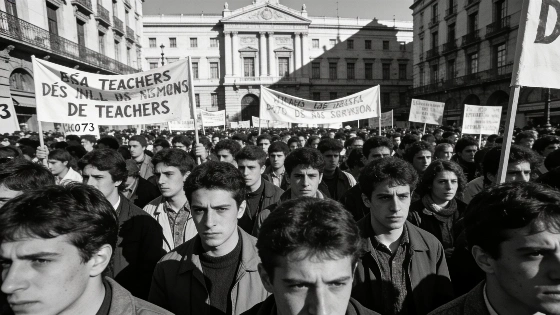
The strike, which began on May 11 and continued until June 12, saw five weeks of widespread walkouts and demonstrations by Valencian teachers. During this period, more than ten meetings took place between union representatives and the regional education authorities, led by Consellera Carmen Ortí. Only partial agreements were reached, including a reduction in bureaucratic workload—supported by STEPV, CCOO, UGT, and CSIF, but not ANPE—and a salary improvement deal backed by CSIF and ANPE. CSIF also accepted the administration's proposal regarding the Valencian language. The three unions maintaining the indefinite strike—STEPV, CCOO, and UGT—agreed to suspend industrial action following a consultation with teachers after June 12. However, with many demands still unmet, including issues related to staffing, class sizes, pay, infrastructure, inclusion, bureaucracy, vocational training, and language policy, unions have warned that protests could resume in September if no further progress is made.
These payroll disputes come at a time of heightened tension in the region's education sector. The scale of the deductions and the administrative errors have added to the frustration among teachers, who already feel their core demands remain unresolved. The situation echoes other recent incidents in Spain where public sector actions have led to controversy, such as the disruption during a minute of silence for Venezuelan earthquake victims at a football match in Guadalajara, which drew widespread attention and debate, as detailed in this related report.
For context, the Valencian Community has a long tradition of active teacher unions and frequent negotiations with regional authorities. The STEPV is one of the most influential unions in the area, often leading collective actions. Salary deductions for strike participation are standard practice in Spain, but errors in calculation or application can lead to legal challenges and further industrial unrest. The current dispute highlights the ongoing struggle between educators and the administration over working conditions and the management of public education resources.