Volkswagen’s ID.Polo enters the electric city car market with three power options and a starting price under 26,000 euros. Early reviews highlight its practical interior, strong range, and a return to physical controls that set it apart from earlier ID models.
Volkswagen has entered the electric city car market with the new ID.Polo, aiming for buyers who want a practical EV at a reasonable price. According to Volkswagen Deutschland, the base Trend version starts at 24,995 euros in Germany, slightly less than earlier estimates. In Spain, the starting price is 25,990 euros, dropping to 17,900 euros with financing and incentives, as reported by several Spanish automotive outlets. This pricing puts the ID.Polo among the most affordable options in its class.
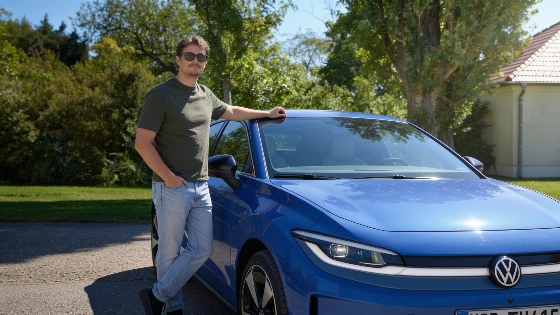
The ID.Polo’s design moves away from the busier look of earlier ID models. Volkswagen calls the new style Pure Positive: clean lines, a simple shape, and a focus on function. The car is 4.05 meters long, matching its combustion-engine predecessor, but the aerodynamic front and upright rear, with LED lighting and an illuminated badge on higher trims, mark a clear update.
Demand for the ID.Polo has exceeded expectations, with over 30,000 orders placed and wait times for some configurations reaching at least 10 months.
Inside, Volkswagen has responded to criticism of earlier models by bringing back physical controls for climate and steering wheel functions. The cabin mixes hard plastics with padded areas, but the main change is the return of real buttons, which makes the car easier to use day to day.
The dashboard features a 10-inch digital display behind the wheel and a 13-inch central touchscreen. There’s also a retro-inspired display mode that nods to the original Golf, though it hides some information. The longer wheelbase gives the rear seats enough space for two adults, and the boot holds 441 liters—more than the combustion Polo and many competitors.
The ID.Polo uses the MEB+ platform and comes with three powertrain options. Entry-level versions have a 37 kWh LFP battery and either an 85 kW (116 hp) or 99 kW (135 hp) motor, with a claimed range of 323–326 km. The top version, tested here, uses a 52 kWh NMC battery and a 155 kW (211 hp) front motor, with an official range of 449 km. In a recent test by t3.com, the 52 kWh model managed up to 281 miles in real-world driving. During the launch, some drivers saw consumption as low as 11.6 kWh/100 km, suggesting the official range figures are realistic.
Volkswagen has already begun regional presentations of the ID.Polo, with official ID.Polo Days scheduled for September 4–5, 2026 in Germany. Production for the Spanish market is confirmed to take place at the Martorell plant, and local deliveries are set to start from there.
On the road, the ID.Polo feels nimble and easy to handle. Power delivery is smooth, and the car’s city driving is helped by a regenerative braking mode that allows for near one-pedal driving. An automatic stop at red lights makes urban trips simpler. Outside the city, the car stays stable and the suspension is well-tuned, with only moderate wind noise at higher speeds.
In corners, the ID.Polo’s chassis feels solid, with little body roll and direct steering. Braking is progressive and more reassuring than in earlier ID models. While it’s not a sports car, the platform’s balance suggests good potential for the upcoming GTI version, which several industry sources expect to launch in 2027 as Volkswagen’s first electric GTI.
Practicality is a strong point. The ID.Polo’s boot space, rear seat comfort, and simple controls make it a realistic choice for daily use. This focus on usability is similar to other recent compact EVs, like the Cupra Raval Endurance, which recently outperformed a British rival in testing.
Volkswagen’s move to bring the ID.Polo’s name and design closer to its main lineup shows a shift in strategy. The company is betting that familiar design, practicality, and price will attract buyers who have been hesitant about electric cars. If Volkswagen can keep up with demand and maintain its pricing, the ID.Polo could become a benchmark for affordable electric cars in Spain and beyond.