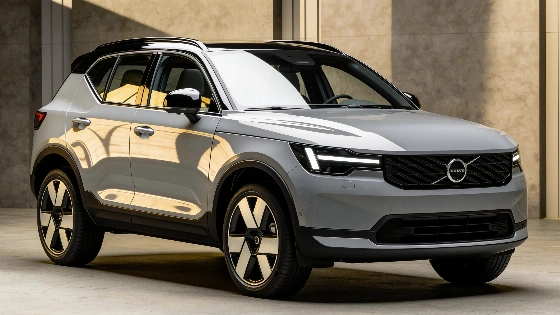
Volvo’s 2026 XC40 arrives with a major refresh, holding onto petrol engines even as its siblings go fully electric. The update brings new design elements, advanced safety features, and a revamped digital interface to the compact SUV.
Volvo is bucking the industry trend toward full electrification by keeping petrol engines in the 2026 XC40, even as the EX40 and EC40 move entirely to electric power. After months of rumors about dropping combustion engines from its compact SUV lineup, Volvo has instead chosen to update the XC40 across the board—design, technology, and safety—while still offering a petrol option.
The exterior changes are immediately noticeable. The XC40 now features Matrix LED headlights with 15 adaptive segments, a new take on Volvo’s ‘martillo de Thor’ design. The front grille and bumper have been reshaped, and the hood and fenders now match Volvo’s latest styling. At the back, there are new LED taillights, a redesigned tailgate, and a revised bumper. Buyers can pick from new diamond-cut alloy wheels in 18, 19, or 20 inches, giving the SUV a sharper look.
For the U.S. market, the updated XC40 will only be available with the B5 mild-hybrid powertrain: a 2.0-liter turbo engine, all-wheel drive, 8-speed automatic, and 247 hp.
Inside, the XC40 2026 gets smarter storage, new upholstery, and updated ambient lighting. The main feature is an 11.2-inch touchscreen running Volvo’s latest Google-based infotainment system, now with the Gemini AI assistant for natural voice commands. Over-the-air updates are standard, so the car’s digital features can stay up to date after purchase.
Volvo has also upgraded safety. The XC40 2026 adds new ultrasonic sensors, cameras, and radar, all managed by a more powerful onboard computer and improved safety software. Driver aids include active emergency steering, automatic emergency braking, collision mitigation, and a door opening alert to protect cyclists and pedestrians. The Pilot Assist system now helps with lane changes, and a 360-degree camera with 3D views improves visibility.
Under the hood, Volvo is holding off on going fully electric for the XC40. The 2026 model will be offered with B3, B4, and B5 mild-hybrid petrol engines, all carrying the Spanish DGT’s ECO label. These engines aim for better efficiency and lower emissions without requiring a plug. Meanwhile, the EX40 and EC40 are fully electric, with P5, P5 Long Range, P8 AWD, and P8 Performance AWD versions, offering up to 584 kilometers of range per charge.
According to leading automotive publications, the XC40 update is described as the most significant package of changes since the model's launch in 2018, rather than a full replacement by an electric version. Sources indicate that production for the U.S. will begin later this year, with sales expected to start in early 2027.
The updated XC40 will continue to be built in Ghent, with a separate assembly center in Malaysia for Southeast Asian markets. Volvo calls these the best versions it has made in the compact SUV segment, even as competitors rush to go all-electric.
The industry is moving quickly toward affordable electric cars, as shown by the recent launch of the Dacia Spring 2027, which targets budget buyers with a price under 15,000 euros. Volvo’s strategy is to offer both advanced electric models and improved petrol options, betting that many customers still want flexibility and aren’t ready to switch to electric just yet.
By keeping petrol engines in the XC40 2026, Volvo is aiming to serve buyers who need options—especially in places where charging stations are scarce or hybrid tech is still more practical. With upgrades in design, safety, and digital features, the XC40 stands out as a premium SUV that bridges traditional and new mobility. In a market full of forced choices, Volvo’s approach is a practical one that may fit real drivers better than the industry’s push for electrification.