San Sebastián has opened its 74th edition with Fatih Akin’s Geister. Werner Herzog received the festival’s Donostia Award as an international line-up prepared to take the red carpet.
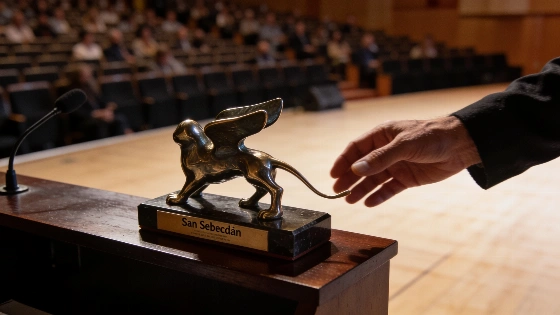
Werner Herzog took the first major spotlight at San Sebastián as the festival opened its 74th edition with Fatih Akin’s Geister. The German filmmaker received the Donostia Award for a career spanning six decades and more than 70 films. The competition began with a dark story of love and loss.
Herzog’s honour was the defining event of the opening day. San Sebastián recognised a body of work shaped by extreme situations, personal obsessions and the contradictions of human nature. The 84-year-old director said the award made him proud, but insisted that his attention remained on the work ahead rather than on counting his films or looking back.
В программу Donostia Award Screenings фестиваль включил новый фильм Вернера Херцога Bucking Fastard продолжительностью 109 минут.
The festival’s main competition has 17 productions competing for the Golden Shell, which will be awarded at the closing ceremony on Saturday 26. The line-up includes Mis muertos tristes by Chilean director Pablo Larraín, as well as Glaxo from Argentina and Las disculpas de Vicentina from Brazil.
Geister gives the competition an unusually intimate opening. A young woman named Farasha dies on the night she meets Faris, the love of her life. She then returns to him in dreams, where their relationship continues as a turbulent romance.
RTVE сообщало, что церемония вручения второго Donostia Award Наоми Уоттс запланирована на 19 сентября и будет сопровождаться показом The Housewife. Отдельную гала-церемонию также должны были транслировать на La 2.
Akin filmed almost the entire production in black and white. The idea began with his son’s notion of friendship with a ghost, then found its emotional direction after the death of Akin’s father. The director said he had been unable to attend the funeral in Turkey and had hoped to see his father in dreams for one last conversation.
That absence became the foundation for a story about grief, parenthood, mortality and lovers who meet after death. The film places a private family experience at the centre of the festival’s opening competition entry instead of relying on spectacle.
Naomi Watts will receive the second Donostia Award on Saturday. The British actress has twice been nominated for an Oscar for 21 gramos and Lo imposible and has worked with Alejandro González Iñárritu, J.A. Bayona, David Lynch, Peter Jackson and Clint Eastwood.
Brad Pitt is among the stars expected in San Sebastián, alongside Penélope Cruz, Marion Cotillard, Orlando Bloom, Ricardo Darín, Jeremy Irons, Rami Malek and Diego Luna. Their arrival will give the festival’s red carpet a broader international profile, while the films remain at the centre of the competition. According to Deadline, Pitt’s Heart of the Beast was also scheduled to screen out of competition, showing that the festival’s star programme extends beyond the opening-night event.
Latin American cinema also has a substantial place in this year’s programme. The Horizontes Latinos section opens with Siempre soy tu animal materno by Costa Rican director Valentina Maurel, which won the best actress award in Un Certain Regard at Cannes.
Later screenings include Ceniza en la boca by Mexican actor and filmmaker Diego Luna, about a mother and her two children who migrate to Spain, and La ilusión de un verano sin fin by Argentine director Alessandra Sanguinetti, which received an award at Locarno. Twelve films from Argentina, Brazil, Chile, Colombia, Mexico and Paraguay are competing for the best Latin American film prize.
The programme makes San Sebastián more than a parade of visiting stars. It brings films from Latin America to a major European platform, while placing Herzog’s long career beside Akin’s personal meditation on death and memory. The opening’s strongest material lies in cinema built around difficult human experiences, rather than in celebrity attendance.
With Geister leading the first competition day and Herzog receiving its principal honour, the festival has begun with a combination of artistic risk and established authority. The official festival schedule placed Herzog’s press conference and Donostia Award ceremony on 18 September, while the parallel recognition of Watts broadened the festival’s tribute programme. The result gives the 17-film race a serious dramatic centre and keeps Latin American cinema firmly visible.