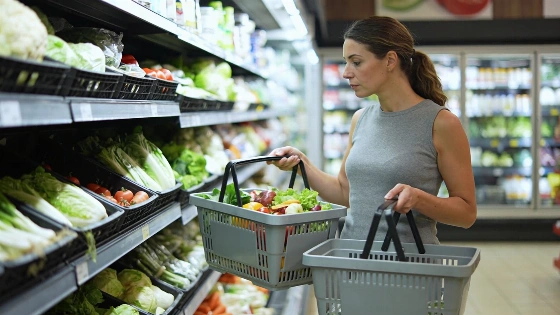
A household can save an average of €1,310 a year by choosing the cheapest supermarket nearby. Madrid has the widest gap, while fresh food prices continue to rise.
In Madrid capital, the difference between the cheapest and most expensive supermarket reaches €4,381 a year. Across Spain, the average saving is €1,310 for a household that chooses the cheapest option in its area. That gap is real.
The OCU study puts Torrent in Valencia at the lowest average price level among the locations examined. Getxo in Bizkaia, along with Pozuelo de Alarcón and Majadahonda in Madrid, ranks among the most expensive. Barcelona, Bilbao and San Sebastián have the highest average prices among provincial capitals.
The average annual supermarket bill reached €6,602 per household, according to the OCU comparison. The saving figure therefore reflects a year-long basket analysis, not a one-off promotion.
Dani remains the cheapest chain overall. Family Cash and Tifer follow it, while Alcampo and Supeco also rank among the more affordable options.
Lidl made the sharpest move. It is now the cheapest choice in 60 of the locations studied, compared with 18 last year.
The cheapest chain is not the same everywhere. A supermarket that leads in one municipality may offer less value in another. Local checks matter more than a national reputation.
The OCU basket became 1.8% more expensive over the past year. Fresh products rose by 4.7%. Fish recorded the steepest increase at 8.6%, while meat prices climbed 3.7% and fruit and vegetables rose 3.5%.
The comparison was based on 101,520 prices across 690 stores in 38 cities and online supermarkets. The basket covered 244 products in 80 categories, giving the ranking a broader basis than a small sample of promotional prices.
The pressure has built over time. Since 2021, the basket has risen by 39.5%, even though the latest increase was slower.
For households, the small yearly gap between supermarkets comes on top of a much larger rise in everyday food spending. The bill keeps climbing.
The comparison used prices collected in April and May from 690 stores in 38 cities and from online supermarkets. The main basket contains 244 products across 80 categories, with food, cleaning goods and personal hygiene items included.
That broad sample makes the study a consumer guide and a measure of price differences between chains and locations. EFE reported that eight of the 28 major chains reduced prices in 2026. Retail competition has grown.
The Madrid figures add another layer to the capital's household pressures beyond its recent weather report. The store chosen by each shopper is the deciding factor here, not a national average.
Checking local prices can cut the bill. Fresh food remains the main source of new inflation within the basket.
The OCU ranking does not promise that one chain will always be the cheapest. It gives consumers a clear basis for changing where they shop. Lidl is now the cheapest option in 60 locations, and Madrid shows a possible annual difference of €4,381.
As El País reported, the 39.5% increase since 2021 means that the latest slowdown is happening against a much more expensive baseline. Prices are still high. Store choice can still change the final bill.