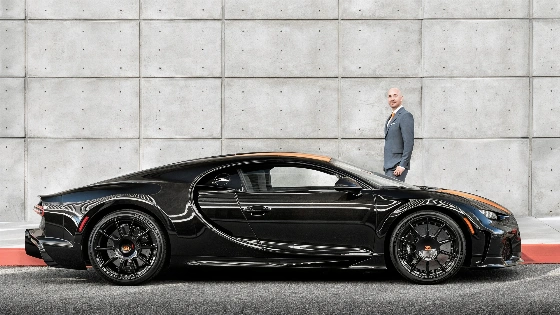
Sascha Doering, Bugatti’s operations chief in America, chooses a luxury sedan for daily life instead of the brand’s iconic hypercars. His approach centers on personal connections with clients, not flashy displays.
Sascha Doering, the director of operations for Bugatti in America, is surrounded by some of the world’s most coveted cars—yet he deliberately leaves them in the garage when it comes to his own commute. Instead, Doering opts for an Audi A8 L, a decision that reflects both his philosophy on leadership and the unique demands of serving Bugatti’s exclusive clientele.
Bugatti’s business is built on rarity. The French marque produces just 80 to 100 vehicles annually, with around 40 destined for American buyers in a strong year. For Doering, this scarcity means every customer counts. He keeps track of clients’ family milestones, calls them without a sales agenda, and often shares dinners when travel schedules align. “Personal relationships are of utmost importance,” he explains, emphasizing that these gestures are not marketing tactics but the core of his role.
Despite his position, Doering is careful not to project the image of an executive flaunting a multimillion-euro supercar. “I know my place. I don’t want to give the impression that the Bugatti COO for America spends his days cruising in a Bugatti,” he says. Instead, he reserves driving the brand’s models for special occasions—client events, rallies, and test drives—where the experience is shared, not shown off.
Choosing Comfort Over Show
Doering’s daily driver, the Audi A8 L, is no ordinary car, but it’s a far cry from the raw power and spectacle of a Bugatti. The executive sedan, also part of the Volkswagen Group, offers understated luxury and comfort—qualities that suit Doering’s routine of meetings and client dinners. For a company where losing even a single customer can be significant, the choice of a discreet, refined vehicle is intentional. “We can’t replace our clients. We can’t afford to lose them because they are as rare as our products,” Doering notes.
This approach stands in contrast to the more visible choices of other high-profile figures in the automotive world. For example, when José Mourinho returned to Madrid, his selection of the BMW XM as his official car made headlines and highlighted the ongoing partnership between Real Madrid and BMW, as detailed in this recent comparison of luxury executive vehicles.
Rejecting AI—For Now
Doering’s traditional mindset extends beyond his car keys. While much of the automotive industry is racing to integrate artificial intelligence into design and production, Bugatti remains cautious. According to Doering, the development of the new Bugatti Tourbillon did not involve AI tools. “They’re not using AI for design purposes—maybe in the future, but for the Tourbillon, I don’t think it was used,” he says. Personally, Doering prefers to craft his own PowerPoint presentations, relying on AI assistants like Claude only for routine, repetitive tasks. He believes that preparing materials himself sharpens his analysis and storytelling, rather than delegating these core functions to algorithms.
From Humble Beginnings
Doering’s journey to Bugatti was far from predictable. His first job was in an IKEA café in Germany, saving up for his first vehicle—a midnight blue Vespa with a white leather seat—since he couldn’t get a driver’s license before 18. That early experience shaped his appreciation for hard work and personal connection, values that now define his leadership style at Bugatti.
Context and Perspective
Bugatti’s approach to customer care is distinctive in the luxury automotive world. While brands like Toyota host large-scale events such as the Toyota GR Day to engage their most loyal clients, Bugatti’s strategy is more intimate and individualized. The company’s refusal to rush into AI adoption also sets it apart, signaling a commitment to craftsmanship and personal touch over technological trend-chasing.
As the automotive industry evolves, Doering’s choices—both in the cars he drives and the way he leads—offer a reminder that, for some brands, exclusivity and genuine relationships still matter more than spectacle or automation.