Major brands like LG and Daikin recommend cleaning air conditioner filters every two weeks during heavy use. Experts say this simple habit can reduce energy consumption by up to 15% and prevent costly breakdowns. Here’s what you need to know to keep your AC running smoothly.
During the hottest months, air conditioners often run for hours each day—yet many households overlook a simple step that can make a real difference in performance and cost. LG and Daikin, two of the world’s leading air conditioning manufacturers, now advise users to clean their AC filters every two weeks when the system is in frequent use. This recommendation is echoed by Spain’s IDAE (Institute for Energy Diversification and Saving), which also stresses the importance of regular maintenance, though it does not set a fixed schedule.
The U.S. Department of Energy estimates that cleaning or replacing a dirty filter can reduce an air conditioner’s energy consumption by 5% to 15%. While some sources claim savings as high as 50%, official guides clarify that such dramatic reductions are rare and depend on multiple factors, including how dirty the filter is, the hours of operation, and the specific model. In practice, the real benefit is a more efficient system and lower electricity bills—especially during periods of intense heat.
How Dirty Filters Drain Performance
Air conditioner filters are designed to trap dust, lint, and other particles before air is recirculated into the room. When these filters become clogged, airflow drops and the unit must work harder and longer to reach the desired temperature. This not only increases energy use but can also strain the system, leading to longer cooling cycles and higher risk of breakdowns. A blocked filter also reduces the amount of air passing over the internal coils, limiting heat exchange and making the AC less effective—an issue that becomes especially noticeable during heatwaves.
Some online tips suggest that a dirty filter can double your energy costs, but these claims are not supported by official data. The U.S. Department of Energy’s guidance is more conservative, pointing to a 5–15% reduction in consumption with regular filter care. The actual impact depends on the level of dirt, the design of the unit, and how often it’s used.
How Often Should You Clean Your AC Filter?
Manufacturers’ recommendations vary. LG and Daikin suggest a two-week interval for cleaning during peak usage. Mitsubishi Electric extends this to every two to four weeks, while Samsung recommends monthly checks. The right frequency depends on your environment—homes with pets, high dust, or heavy daily use may need more frequent attention. Ultimately, the best guide is your unit’s manual, which takes into account the specific design and filter type.
For most households, a visual check every two weeks is a practical rule of thumb when the AC is running daily. If the system is used less often, the interval can be extended. Washable filters should be cleaned with water and mild detergent, while others may need vacuuming or replacement. ENERGY STAR advises monthly checks for central systems and immediate action if filters appear dirty or airflow weakens. Complete maintenance also includes cleaning the coils, fan, drain, and outdoor unit.
How to Clean a Reusable Filter Safely
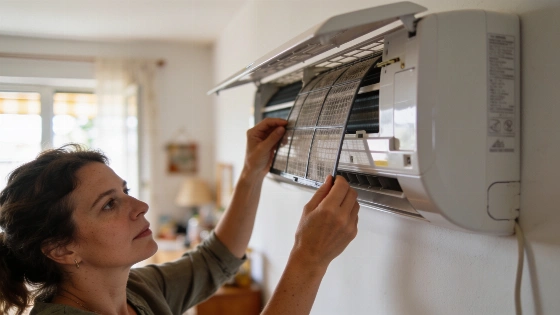
Before opening the indoor unit, always switch off the AC and disconnect it from power. Remove the filter according to the manufacturer’s instructions, taking care not to bend or damage the mesh. LG recommends vacuuming dust and, for certain filters, washing with lukewarm water (below 40°C) and mild detergent. Some specialty filters should not be washed. Always check your manual for specifics.
Let the filter dry completely in the shade before reinstalling. Replacing it while damp can cause odors or mold. Avoid harsh chemicals or abrasive sponges, which can damage the mesh. Daikin also recommends using neutral soap and warns that home cleaning does not replace professional servicing. Tasks like handling refrigerant or electrical components should be left to qualified technicians.
When Home Cleaning Isn’t Enough
If you notice weak airflow, slow cooling, increased noise, persistent odors, leaks, or ice formation, a dirty filter may be to blame—but these symptoms can also signal deeper issues. According to IDAE, loss of cooling could indicate a refrigerant leak or mechanical fault, while drainage problems can cause water to drip from the unit. If problems persist after cleaning the filter, it’s time to call a professional.
ENERGY STAR recommends a full system check-up at least once a year, and Daikin echoes this advice. A technician can inspect coils, fans, drainage, electrical connections, and refrigerant levels—ideally before the summer season begins. To keep daily consumption in check, IDAE suggests setting the thermostat to 26°C or higher, keeping blinds down during the day, and ventilating at cooler hours. Using a fan alongside your AC can also help distribute cool air more efficiently without lowering the thermostat.