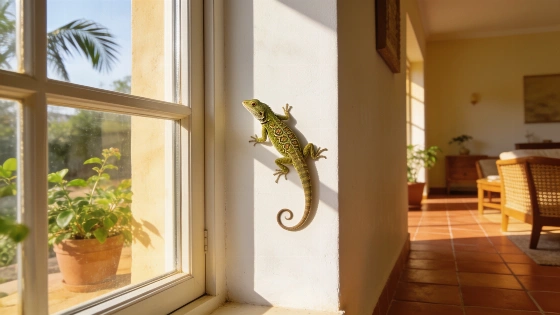
Spotting a lizard inside your home can be surprising, but it’s rarely a cause for concern. These reptiles often seek warmth and shelter, and their appearance is seen in some traditions as a symbol of renewal and protection. Here’s what their visit could mean for your household.
A lizard darting across a wall or pausing near a window can catch anyone off guard, especially during colder months. Yet for many homes in Spain, such encounters are more common than they seem—and often more positive than people expect.
Most lizards enter houses in search of warmth, food, or a safe place to hide from the cold. As cold-blooded animals, their body temperature depends on the environment, so they naturally gravitate toward sheltered, sunlit, or heated spaces when outdoor conditions become harsh. According to the Universidad Católica de Chile, lizards limit their activity to times when the temperature allows them to move comfortably, which explains why they may appear indoors as winter sets in.
Natural Allies Indoors
While the initial reaction to a lizard indoors might be surprise or even discomfort, these reptiles are rarely harmful. They often slip in through open doors, windows, or small cracks, drawn by the promise of warmth or the scent of insects. The MSD Veterinary Manual notes that reptiles regulate their temperature by moving between cool and warm areas, making sunny patios, protected corners, and even kitchens attractive spots.
Beyond their harmlessness, lizards can actually benefit the household. Many species, such as the Iberian wall lizard, feed on insects and small invertebrates. Their diet includes mosquitoes, flies, ants, moths, and spiders—making them natural pest controllers. While a single lizard won’t eliminate an infestation, its presence can help keep insect populations in check, especially in gardens and outdoor areas.
Symbolism and Tradition
In some cultural traditions, the appearance of a lizard carries additional meaning. According to Feng Shui, a lizard in the home is seen as a sign of protection, adaptability, and renewal. The animal’s ability to shed its tail and survive is often interpreted as a metaphor for leaving the past behind and embracing new beginnings. When a lizard appears near entrances, windows, or spaces associated with daily life, it is sometimes viewed as a symbol of positive change or energetic movement within the home.
Specific locations can also influence interpretation. For example, a lizard near a window may be seen as a sign of new opportunities, while one in the kitchen—an area linked to nourishment and family well-being—can be associated with abundance.
What to Do If You Find a Lizard
If you spot a lizard indoors, there’s usually no need for alarm or drastic action. The best approach is to leave a door or window open to allow it to exit naturally, avoiding direct handling. To prevent future visits, check for gaps, damaged screens, or cracks that could serve as entry points and seal them if necessary.
Importantly, a lizard’s presence does not signal anything negative. Most are simply seeking warmth, food, or shelter, and their stay is typically brief. As both a natural insect deterrent and a symbol of resilience in some traditions, their visit can be seen as a small but meaningful reminder of the balance between nature and home life.
For those interested in the broader context, lizards are a common part of Spain’s biodiversity, especially in regions with mild winters. Their adaptability allows them to thrive in both rural and urban environments, and their ecological role as insect predators is well established. While superstitions and symbolism vary, the practical benefits of sharing space with these discreet guests are clear.