Major wildfires in Madrid, Ávila, and Castellón have led to over 55,000 evacuations and confinements. Authorities warn of worsening conditions as a new heatwave approaches. Emergency services focus on protecting urban areas and critical infrastructure.
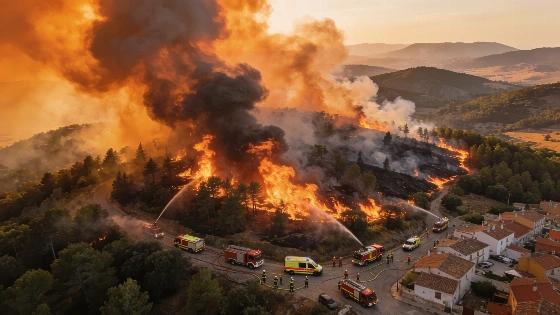
Spain is facing one of its most severe wildfire crises in recent years, with active fires in Madrid, Ávila, and Castellón forcing the evacuation or confinement of more than 55,000 people. Emergency services are working under challenging conditions, as strong winds and an impending heatwave complicate efforts to contain the flames and protect urban centers.
In the Sierra Oeste region of Madrid, the fire has already affected 28,000 hectares, with the front advancing toward key municipalities such as San Martín de Valdeiglesias and the embalse de San Juan. The situation remains critical, with authorities warning that wind gusts up to 30 kilometers per hour are making firefighting operations increasingly difficult. The president of the Community of Madrid, Isabel Díaz Ayuso, described the scenario as "a devilish situation," highlighting the particular danger in the western flank and around the reservoir.
Meanwhile, in Ávila, the fire originating in Burgohondo has burned approximately 50,000 hectares, making it one of the largest and most aggressive wildfires in Spain's history. Efforts are concentrated on containing active fronts and safeguarding town centers, especially as the fire threatens to merge with the Madrid blaze. The government delegate in Castilla y León, Nicanor Sen, noted that despite strong winds, emergency teams have so far managed to defend all urban areas at risk.
Castellón's Vall d’Uixó is also under severe threat, with over 7,200 hectares burned and more than 16,000 residents evacuated. Over 400 ground personnel and 25 aerial units are deployed, focusing on Eslida, the Monserrat urbanization in Betxí, and Montí in Onda. Authorities have extended evacuations and confinements, affecting 75,000 people, at least until midnight. The cause of the fire remains under investigation, with the Guardia Civil taking witness statements and no evidence yet pointing to natural origins.
National and regional governments have mobilized significant resources. The Ministry for the Ecological Transition and Demographic Challenge (Miteco) has deployed 37 units, including eight forest fire brigades, 13 amphibious planes, and multiple helicopters, with the majority concentrated in Madrid and Ávila. Nearly 3,000 personnel and a thousand vehicles and aircraft are engaged in the response. The Ministry of the Interior has published updated maps of evacuated and confined municipalities, with 13 in Madrid, 16 in Ávila, and 12 in Toledo affected. Key towns under confinement include San Martín de Valdeiglesias, Valdemaqueda, Villa del Prado, and Pelayos de la Presa in Madrid, and Navaluenga, Cebreros, and El Tiemblo in Ávila.
Prime Minister Pedro Sánchez visited the Vall d’Uixó command post, warning that the coming hours will be especially difficult as a new heatwave is set to hit the Iberian Peninsula. He called for maximum caution and announced that a royal decree will be approved to designate the affected areas as severely impacted by a civil protection emergency, paving the way for additional aid and reconstruction efforts. The president also praised the institutional cooperation across regions in fighting the fires and emphasized the need for recovery and rebuilding once the immediate threat subsides.
Madrid's regional government has introduced a support package for those affected, including free legal advice, a line of guarantees for businesses and self-employed workers, and a €30 million plan for residents who have lost their homes. This includes rental assistance for up to 12 months and subsidies for rebuilding damaged properties. The region continues to assess the damage to determine further aid measures.
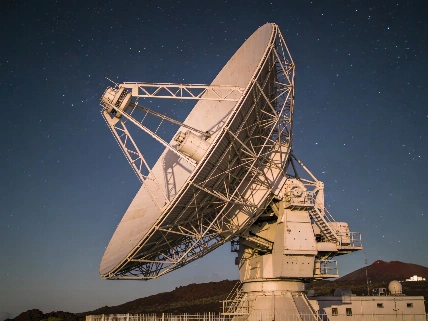
Emergency services have responded to nearly 1,300 incidents, with 21 social care centers and 17 schools evacuated. Thirteen roads remain closed, and the NASA deep space tracking station near Robledo de Chavela narrowly avoided damage after being evacuated as flames approached.
Authorities stress that the next two days are crucial for controlling the fires, as meteorological conditions are expected to deteriorate from Wednesday onward. The State Meteorological Agency (Aemet) has issued a warning for a fourth heatwave, raising the wildfire risk to "very high" across much of Spain. The fires have already destroyed at least 153,000 hectares nationwide this year, six times more than in the same period of 2025.
For those seeking further context on the impact of these wildfires and the challenges faced by evacuees, a recent report details how shelters in Talavera de la Reina and Escalona have become temporary homes for displaced residents as authorities continue to battle the flames: hundreds find refuge as wildfires disrupt life in central Spain.
Spain's wildfire emergency highlights the growing challenges posed by extreme weather and the need for coordinated action at all levels of government. As the situation evolves, authorities urge the public to strictly follow evacuation and confinement orders to ensure safety and support the work of emergency teams.