In 2026, the Mini John Cooper Works Aceman became one of the most talked-about electric vehicles on the Spanish market. Its arrival sparked a wave of interest not only among brand enthusiasts but also among those who are skeptical of sporty electric cars. The pressing question for many: can this car truly deliver excitement, or is it just another attempt to capitalize on nostalgia for the legendary JCW badge?
Exterior challenge
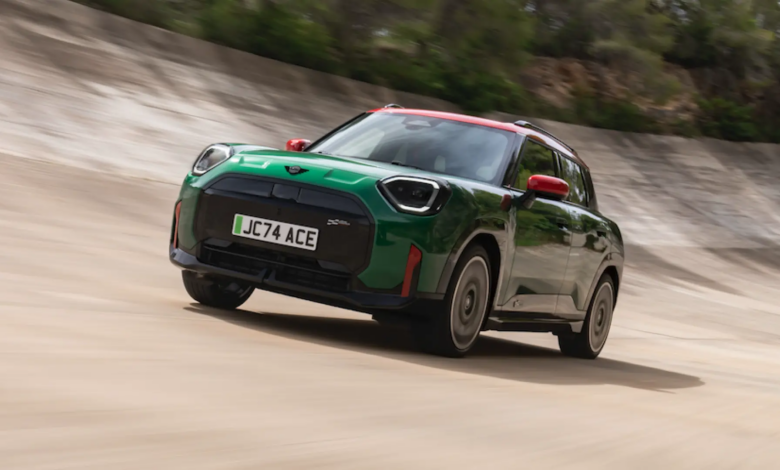
The Aceman’s looks make a strong first impression. A glossy black grille, bright red brake calipers, and distinctive vertical elements ensure it stands out among other Minis. At just over four meters long, it fills the gap between the classic Mini Cooper and the larger Countryman, while retaining the brand’s signature style. Unlike the usual ‘hot’ hatchbacks, the Aceman resembles a true urban crossover with sporty hints, but without excessive aggression.
The exterior details emphasize its dynamic character: large 19-inch wheels, compact glazing, and a prominent spoiler hint at serious ambitions. However, despite its sporty edge, the car maintains Mini’s trademark refinement—something fans of the brand especially appreciate.
Interior and ergonomics
Inside, the Aceman greets you with a unique blend of creativity and practicality. The centerpiece is a massive round OLED display, which acts as the true brain of the entire multimedia system. Overall, the trim quality is respectable, though some hard plastic elements may surprise those expecting premium materials throughout.
Sport seats with red stitching provide excellent support, which is especially important for dynamic driving. The rear row lacks generous space: adult passengers will feel cramped, especially compared to more family-oriented models like the Kia Niro or Volkswagen ID.3. The 300-liter trunk is suitable for short trips, but don’t count on it for long journeys with lots of luggage.
Dynamics and Charging
The main intrigue is how the Aceman behaves on the road. The electric motor produces 258 hp and 350 Nm of torque, allowing for 0–100 km/h acceleration in just 6.4 seconds. This is an impressive result for a compact crossover, which not only promises but truly delivers a sense of acceleration. Accelerating from 60 to 100 km/h takes 3.4 seconds, and from 80 to 120 km/h—6.1 seconds, confirming its sporty ambitions.
The top speed is limited to 200 km/h—a figure rarely seen among urban electric cars. However, there’s a trade-off for this performance: real-world energy consumption during spirited driving reaches 20–23 kWh per 100 km, which reduces the range to 290 km or even less. The officially stated autonomy is 355 km, but in reality this figure seems out of reach.
Technology and Experience
The battery has a capacity of 54.2 kWh (49.2 kWh usable) and supports fast charging up to 95 kW DC and 11 kW AC. While these are not record-breaking figures, they are quite adequate for city driving. It’s important to note that driving at high speeds quickly drains the battery, which could be an unpleasant surprise for those planning long trips.
The chassis and suspension are tuned for maximum handling. The stiff suspension and sharp steering create that signature ‘go-kart’ feeling Mini is known for. However, the nearly 1.9-ton weight is a reminder of the laws of physics: despite its engaging character, this car demands careful handling at high speeds. The brakes are effective, but during aggressive driving the car’s weight is noticeable.
Details and atmosphere
Attention to detail is evident in everything—from the signature toggles to the unique drive mode selector. The artificial sound, which changes depending on the selected mode, doesn’t replace the classic engine roar, but adds emotion and never lets you forget that you’re behind the wheel of a Mini with real character.
The Aceman JCW costs €42,800 in Spain, making it one of the most expensive models in the lineup. For that price, buyers get not just performance and style, but also a unique experience that’s hard to find among rivals. However, the high price and limited practicality may turn away pragmatic drivers.
The Mini John Cooper Works is more than just a line of cars; it’s an entire philosophy that merges sporting spirit with British style. Since the debut of the first JCW models, the brand has become a symbol of excitement and individuality. In the 2020s, Mini is actively rethinking its traditions, embracing electrification and modern technology while staying true to its roots. The Aceman JCW is a striking example of how legendary ideas can be reimagined in a new format, preserving their distinctive character and sparking debate among fans and critics alike.