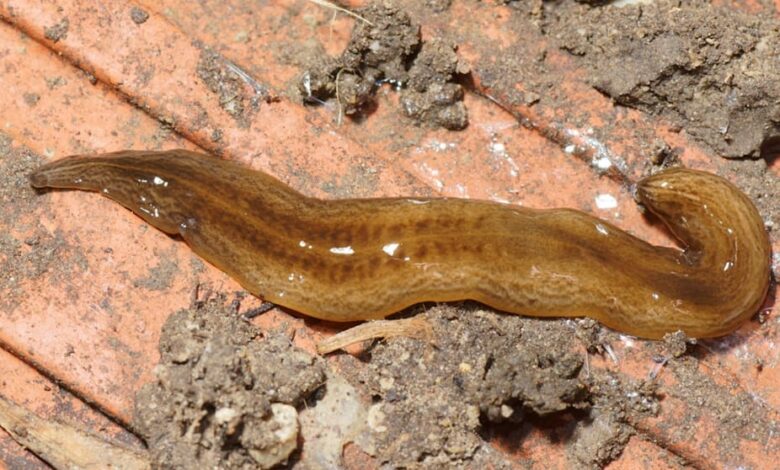
In recent years, European ecosystems have been facing a new challenge: the predatory worm Obama nungara, once native exclusively to South America, is rapidly spreading across the continent. This flatworm, originally from Argentina, has already been spotted in gardens and parks in Austria, France, and Germany. Its appearance is causing concern among biologists and farmers, as it has the potential to dramatically alter the natural balance of the soil.
Obama nungara was first detected in Austria near Tulln, in Lower Austria. Over the past two years, experts from the Vienna Natural History Museum and the University of Innsbruck have recorded four sightings of this species. Genetic studies have confirmed that it is indeed the predatory worm that has already become a problem in several European countries.
Pathways of introduction
The primary route by which Obama nungara enters Europe is through the import of ornamental plants. It crosses borders unnoticed, carried in soil and roots, and then quickly colonizes new territories. In France, the worm is already present in about three-quarters of the country, and in Germany, it was first reported in 2020, including sightings in Bavaria.
Experts note that the worm is highly resilient and can quickly adapt to new conditions. In Europe, it has almost no natural enemies: birds and hedgehogs avoid it due to its unpleasant, bitter taste. This enables Obama nungara to reproduce freely and expand its range.
Impact on soil
The main threat posed by this species is the destruction of earthworms. Earthworms are essential for loosening and enriching the soil, promoting aeration and the decomposition of organic matter. Obama nungara actively hunts earthworms, and also feeds on snails, insect larvae, and woodlice. If earthworm populations decline sharply, it could degrade soil quality and reduce agricultural yields.
Scientists emphasize that the consequences of widespread invasion by the predatory worm could be long-term, affecting not only agriculture but the entire ecosystem. Plant debris would begin to accumulate in the soil, water permeability would deteriorate, and this in turn would impact plant growth and the overall state of the environment.
Geography and Climate
So far, Obama nungara is found mainly on the eastern edge of its suitable habitat. Distribution models indicate that Austria and Germany are on the periphery of zones where the worm can comfortably survive. However, climate change and rising average annual temperatures could alter the situation: the range of the predatory worm is expected to expand northward and eastward.
With warming temperatures, the worm is able to colonize new regions where it previously could not survive due to the cold. This creates additional risks for Central and Eastern European countries, where agriculture plays a major role in the economy.
Scientists’ Response
Biologists and ecologists are closely monitoring the spread of Obama nungara. It is still unclear whether this species will establish itself permanently in Germany and Austria. Research is ongoing, with scientists analyzing the genetic characteristics of the populations and developing methods to control the numbers of this predatory worm.
At the same time, experts urge gardeners and farmers to be vigilant when purchasing ornamental plants and to regularly inspect the soil for unusual species. If any suspicious worms are found, it is recommended to report the discovery to local environmental organizations.
In case you didn’t know, Obama nungara is a flatworm up to 7 centimeters in length, distinguished by its characteristic dark coloration and elongated body. The species was first described in 2016 by French scientists. Since then, it has attracted close attention from biologists around the world. In Argentina, its native habitat, this worm is considered a common soil dweller, but in Europe, it has become a dangerous invasive species capable of causing significant damage to ecosystems and agriculture.