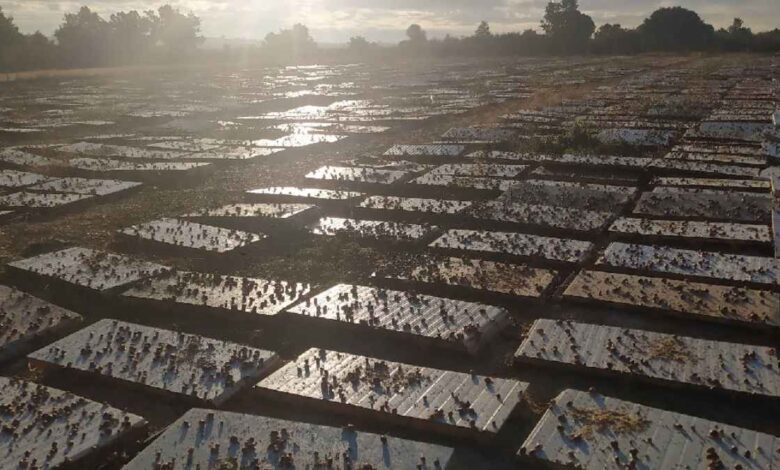
In the heart of the Zamora province, in the municipality of Fonfría, a unique production cluster has emerged in recent years for Spain. Five farms specializing in the breeding and fattening of snails have managed to turn a traditional regional activity into a modern and sustainable business. According to Talent24h, the annual production volume here reaches 30 tons, and the products are marketed under the Caracoles de Aliste brand.
National market leaders
Today, Fonfría is the municipality with the highest concentration of snail farms in the country. Four of them are located directly in Fonfría, and another one is in neighboring Bermillo de Alba. The project is led by local entrepreneurs: Jorge Corral Rodríguez, Sergio López Vaquero, Mercedes Escudero Rodríguez, Miriam Fradejas Rodríguez, and Héctor González Velasco. Their efforts have created a true production microclimate in the rural area, making this corner of Aliste stand out across the entire Iberian Peninsula.
Unlike other agricultural experiments, which are not always successful—such as attempts at large-scale insect farming, covered in detail in the article about the risks and pitfalls of new agribusinesses in Spain —the farms in Fonfría demonstrate steady growth and strong product demand.
Demand and supply geography
The majority of snails raised in Fonfría end up on the tables of restaurants, bars, and private buyers across Spain. Demand is especially high in Catalonia, where snail dishes have traditionally been popular. Today’s market sets strict quality standards: the product must be clean, uniform, and ready to cook. This has forced producers to implement selection and processing standards, which has increased the trust of professional clients and ensured stability of supply.
Caracoles de Aliste operates according to a full-cycle principle: from controlling the growing conditions to packaging and logistics. This approach not only maintains high quality but also allows the assortment to be adapted to market demand — from live snails to ready-to-eat dishes and even the exclusive ‘Caviar de Caracol.’
Technology and sustainability
Production is based on breeding Helix Aspersa Muller — a species well adapted to the local climate. The snails are collected by hand, sorted, and prepared for shipping. In addition to live specimens, the farms also supply young snails for further breeding. The infrastructure includes an open feeding area covering about 9,000 square meters and a specialized facility for breeding, storage, and cooling of the products.
An important part of this success has been the focus on technological innovation. The Helix Control system allows for monitoring and adjusting key parameters — humidity, temperature, and water consumption. This not only optimizes the fattening process but also reduces environmental impact, making the business more sustainable for rural areas. Producers note that this approach helps preserve jobs and supports population retention in the region.
Product range and new formats
The Caracoles de Aliste range includes live snails, cooked semi-finished products, ready-made dishes in sauce, and the rare for the Spanish market ‘Caviar de Caracol’. Production is certified as artisanal, and the products undergo additional quality checks. Some of the goods are released under the Tierra de Sabor label, which confirms their origin and standard.
All this allows Fonfría not only to preserve traditions but also to shape a modern image for rural business. The farms demonstrate that even in small municipalities, it is possible to create a competitive product in demand across the country. As Talent24h notes, Fonfría’s farmers’ success is an example of how local initiatives can evolve into a sustainable economic model capable of influencing the market and supporting life in rural Spain.