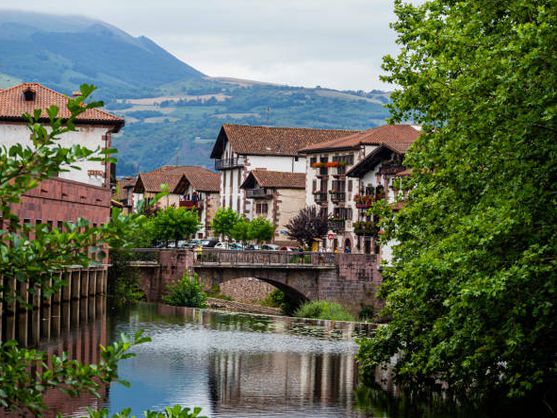
Just an hour’s drive from vibrant Pamplona, in the northern part of Navarre, lies the Baztan Valley—an emerald oasis that seems straight out of a fairy tale. Its capital, Elizondo, serves as the gateway to this world where time flows differently. Here, majestic beech groves stand alongside centuries-old estates, and cobbled streets wind between houses steeped in the spirit of bygone centuries. This is more than just a village; it’s the living embodiment of a region steeped in legends and shrouded in an aura of mystery.
With the arrival of October, the valley is transformed into a true work of art. The forests erupt in a palette of gold, crimson, and ochre, creating landscapes of breathtaking beauty. Situated near the French border, this region is renowned for its oak, chestnut, and beech forests, which are especially lush at this time of year. Pristine nature inspires awe, while the neat houses with their bright flower-filled balconies add splashes of color even on the gloomiest days. The air here is pure and fresh, and every breath brings a sense of calm.
Local culture is steeped in centuries-old traditions and beliefs. On many doors you can see the “eguzkilore”—the flower of the sun, which, according to legend, protects homes from evil spirits. This amulet is just a small part of the region’s rich folklore. According to the elders, Basajaun, a mysterious creature considered the protector of shepherds, is said to inhabit these forests. Lamias, water nymphs, reside in the rivers, and sorginak (witches) hide in the shadows. Over all of them reigns Mari, the mother goddess of nature, just but harsh to those who break her laws.
It is precisely this atmosphere, teetering between reality and myth, that attracted filmmakers. The town and its surroundings became the perfect setting for the screen adaptation of the famous ‘Baztán Trilogy’ based on the novels by Dolores Redondo. Director Fernando González Molina managed to capture the dark and tense spirit that permeates the valley, making it a full-fledged participant in the story. After the films were released, thousands of fans flocked here, eager to see with their own eyes the places where the detective story unfolded.
The history of Elizondo dates back to the Iron Age, but it officially became a town in 1397, when King Charles III the Noble recognized the noble origins of its inhabitants. This illustrious past is reflected in its architecture. The town has preserved several magnificent Baroque palaces, such as Arizkunenea (Palace of the Lady Governors) and Beramundea. Nearby stands Istekonea, known as the House of the Viceroy, associated with Pedro de Mendinueta y Musquiz. On the outskirts is the Datue Palace, once owned by the Viceroy of Peru, Agustin de Jauregui. These buildings are not just stones; they are silent witnesses to the destinies of their distinguished owners.
Among the must-see sights is the Church of Santiago. Built in the early 20th century from distinctive reddish ashlar, it exemplifies the Neo-Gothic style. Its twin square towers topped with domes are visible from afar. Two rivers cross the town, and one of its most picturesque spots is the bridge and dam at Chocoto. Here, the crystal-clear water reflects traditional Basque houses, creating an idyllic scene worth capturing as a keepsake.
And of course, you can’t leave Elizondo without trying the local delicacy—txantxigorri. This traditional pastry is expertly prepared at Panificadora Baztanesa, a bakery that has been around for over half a century. In the book trilogy, it appears under the name Mantecadas Salazar. The sweet, hearty pie has become a true gastronomic symbol of the valley, loved by both locals and the many visitors to this enchanting region.