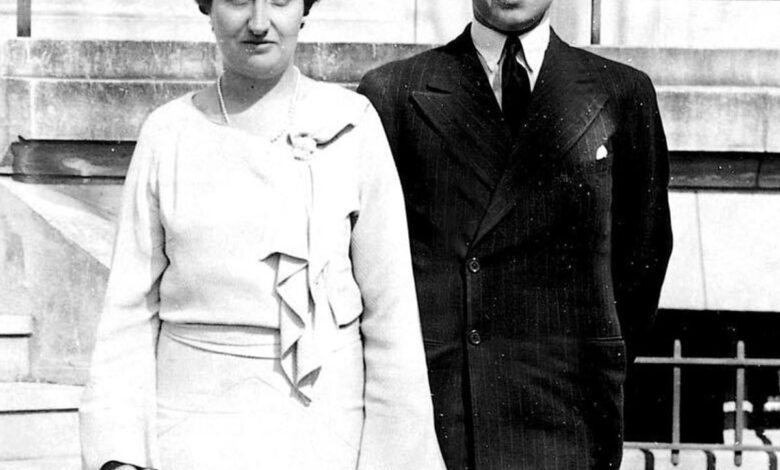
Don Juan de Borbón’s decision to marry his cousin María de las Mercedes de Orleans came years after they last saw each other. This pivotal moment occurred soon after he unexpectedly became heir to the Spanish throne, following the abdication of his two older brothers. The royal family, then living in exile in Rome after the proclamation of the Second Republic, reunited on January 14, 1935, at the wedding of Infanta Beatriz, Don Juan’s sister. It was there that the dynasty’s future took a dramatic new turn.
Don Juan, born in 1913 at the La Granja Palace, was the fifth child of Alfonso XIII and Victoria Eugenie of Battenberg, and he was never groomed for succession. While other candidates, including María’s sisters, were considered for strategic alliances, he was captivated by his cousin’s unique blend of gentleness and strength. María de las Mercedes was the third of four children from the second marriage of Infante Don Carlos Bourbon-Sicily and Princess Louise of Orléans. By royal decree in 1908, King Alfonso XIII granted all their descendants the title of Infante of Spain.
Just eight months after their milestone meeting, on October 12, 1935, the couple was married at the Roman basilica of Santa Maria degli Angeli e dei Martiri, attended by four hundred guests. The bride wore a striking medieval-style gown of silver brocade by Worth. Embracing modesty, she chose not to wear a tiara, opting instead for a simple orange blossom diadem to hold her veil, and carried a bouquet of gladiolus bought at the last minute. Her only jewelry was a pair of pearl earrings and a ruby engagement ring. After the ceremony, the newlyweds received a blessing from Pope Pius XII and held a reception at the Grand Hotel in Rome.
Their honeymoon turned into a trip around the world, after which they settled in Cannes. Nine months later, their first daughter, Infanta Pilar, was born. The rest of their children—Juan Carlos, Margarita, and Alfonso—were born in Rome. Later, the family moved to Lausanne, Switzerland, to be closer to the widowed Queen Victoria Eugenie. Despite its political backdrop, their marriage proved to be a successful partnership. María de las Mercedes was a woman of simple tastes, uninterested in high fashion and jewelry, and played a key role in keeping the family united during turbulent times.
Her resilience was tested time and again. She endured the painful separation from her eldest son when he was sent to study in Spain while the family lived in Estoril. She also faced a challenging relationship with her mother-in-law, Queen Victoria Eugenie, whose strict upbringing sharply contrasted with her own. Additionally, she had to put up with her husband’s extramarital affairs. Don Juan, though a charming man, was notorious for his romantic exploits. Doña Maria bore these hardships with the stoicism characteristic of women of her time.
However, the most devastating blow was the tragic death of her youngest son Alfonso. At just fourteen, he was killed when a pistol belonging to Don Juan accidentally discharged in his brother’s hands. This event plunged Doña Maria into a deep depression that led to problems with alcohol. She sought help in clinics in Switzerland and Germany but was never able to fully recover from the loss.
In the following years, she took on the difficult role of mediator between her husband and son. Tensions arose when Juan Carlos settled in Spain and was later designated Franco’s successor with the title of king—a move Don Juan saw as betrayal. Time eventually healed the rift, and father and son reconciled. In May 1977, Don Juan officially renounced his dynastic rights in favor of his son. Doña María passed away on January 2, 2000, at the La Mareta palace, surrounded by her entire family. Her final resting place is the royal pantheon of the Escorial monastery, where she lies next to her husband, the Count of Barcelona, who died on April 1, 1993.