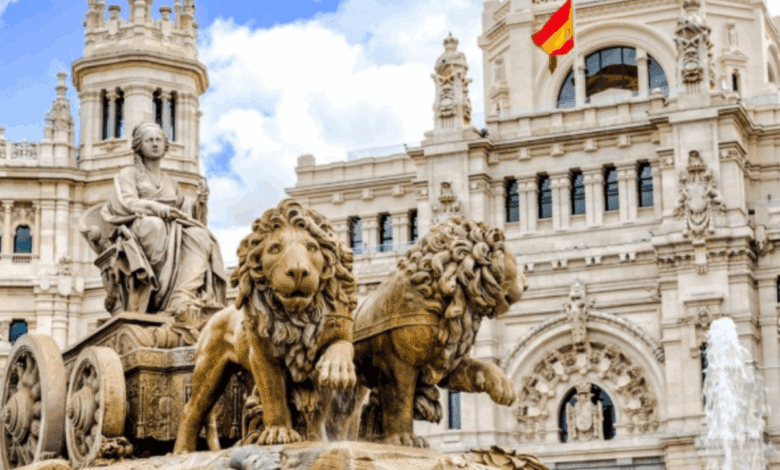
Madrid has made a decision that directly impacts the city’s appearance and cultural heritage. After identifying significant preservation issues with the Fuente de Cibeles, local authorities are launching a full restoration of this iconic site. The question of funding has been resolved without tapping into the city’s budget: nearly the entire sum will be provided by L’Oréal Groupe España. This means Madrid’s residents won’t face extra costs while a historic city symbol gets a new lease on life.
According to El confidencial, an inspection carried out last year revealed numerous defects: accumulated dirt, cracks, corrosion of metal parts, and stability issues in some elements. Without urgent intervention, these problems could have led to further deterioration of the monument. Authorities decided not to delay, but the restoration itself is set to begin right after the visit of Pope Leo XIV, scheduled for June.
Work schedule and timeline
Restoration will commence after June 12, to avoid interfering with major events linked to the Pope’s visit. The work will focus solely on the fountain itself, with no impact on traffic around the square. Experts estimate that restoration will take about five months, with the project expected to be completed by the end of 2026. The total cost is estimated at around €400,000, of which €370,000 will come from L’Oréal Groupe España as part of their program supporting city landmarks.
During the restoration, specialists will clean the stone, remove unsuitable mortars, fill cracks, and treat the joints. Special compounds will be used to protect against biological damage, while metal elements will receive anti-corrosion treatment. The final stage will involve applying a water-repellent coating to extend the fountain’s lifespan and preserve its appearance.
Historical significance
The Fuente de Cibeles is more than just a city landmark—it is part of Madrid’s cultural identity. Created in the 18th century by architect Ventura Rodríguez and sculptors Francisco Gutiérrez and Roberto Michel, the composition depicts the goddess of nature riding a chariot drawn by lions. Since 1895, the fountain has occupied the center of the square, and during the Civil War, it was protected from destruction by special structures.
Today, the Fuente de Cibeles is part of the ‘Landscape of Light,’ which received UNESCO World Heritage status in 2021. This place has become an integral part of city celebrations, sports victories, and major public events. Any changes to its condition prompt a strong public response, so the restoration decision was seen as both timely and necessary.
Funding and public interest
Particular attention was drawn to the fact that funding is provided almost entirely by a private company. L’Oréal Groupe España is allocating funds as part of its cooperation with the municipality, allowing the project to proceed without burdening the city budget. This approach is becoming increasingly popular in Spain, where businesses are actively involved in preserving cultural landmarks.
According to El confidencial, authorities emphasize that the work will not disrupt the daily life of the city center. Access to the square and traffic will remain unchanged, and the restoration will be carried out as discreetly as possible for residents and visitors of the capital. This is especially important given the square’s status as one of the busiest locations in Madrid.
In recent years, there has been a noticeable increase in cases where large companies in Spain take on the costs of restoring historical monuments. For example, in Barcelona, the restoration of a building façade on Paseo de Gracia was recently completed, while in Valencia private investors funded the renovation of the city gates. Such projects not only help preserve cultural heritage but also strengthen ties between business and society, marking a distinct trend in the country’s major cities.