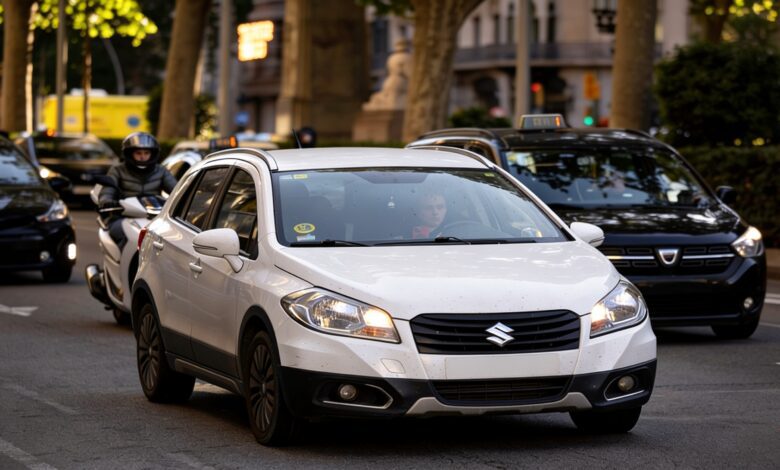
The authorities of Barcelona and its suburbs have approved a plan that will completely ban cars and motorcycles with a yellow environmental sticker from circulating within the Low Emission Zone (ZBE) starting in 2028. This decision will affect about 17% of all private vehicles, including cars and motorcycles registered before 2006 (diesel) and before 2001 (petrol). The new restrictions will be the strictest in Spain and will impact not only residents of Barcelona, but also anyone using private transport within the metropolitan area.
Stricter than before
The plan was approved at a meeting of the Área Metropolitana de Barcelona (AMB) council by a majority vote, despite objections from some parties. According to the AMB, after 2028 the restrictions will gradually expand: by 2030, other categories of vehicles will also be banned. To formally implement the new rules, municipalities will need to amend their ZBE regulations. Currently, many cities in Catalonia enforce such zones only partially or without fines, and some restrictions apply only to visiting vehicles.
Practical consequences
The introduction of the ban means that owners of old cars and motorcycles will have to seek alternatives to private transportation or replace their vehicles. The ZBE already covers Barcelona, L’Hospitalet, Esplugues de Llobregat, Santa Coloma, and Sant Adrià — the largest low-emission zone in the country, spanning almost 100 km². Since 2020, vehicles without an environmental sticker have been prohibited from entering the zone on weekdays from 7 a.m. to 7 p.m., though certain categories are exempt: for example, socially vulnerable families or special-purpose vehicles. Additionally, up to 20 entries per year are allowed with a special permit.
Context and development plans
According to AMB, the tightening of regulations is due to the need to reduce air pollution and improve road safety. The new plan also includes reducing the number of serious accidents, cutting private car use by 10%, expanding public transport, and growing the AMBici public bike network. In three years of operation, the system has reached 25,000 users, with 8,000 trips made daily. Authorities note that diesel car sales are declining while electric vehicle sales are increasing, making it easier to transition to the new requirements.
Earlier, the launch of the ZBE faced delays due to the pandemic and the gradual introduction of restrictions. Now, the AMB plans to support municipalities in implementing the new rules, but stresses that the final decision and responsibility for implementation rest with the city authorities.