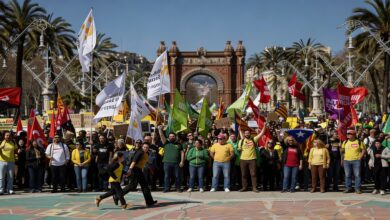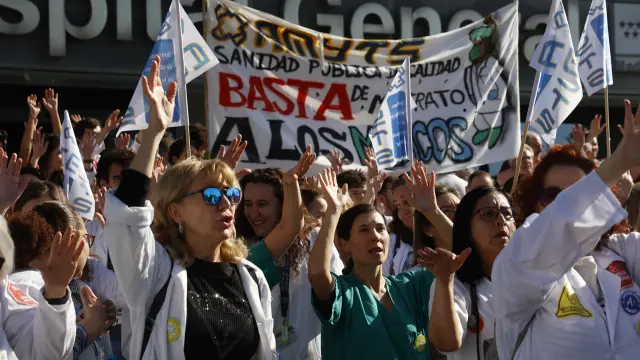
On Monday, outside the walls of Hospital de La Paz in Madrid, a scene unfolded that would have been hard to imagine just a month ago: thousands of healthcare workers, dissatisfied with the new Estatuto Marco, once again took to the streets. This time, the protests coincided with the third consecutive week of strikes, and tensions between doctors and the Ministry of Health are only growing. Nearly thirty meetings in recent months have failed to produce a compromise, and now both sides make no secret of their annoyance with each other.
La Paz and the effect of cancellations
The first day of the new strike wave brought familiar consequences that have become routine in recent months: canceled surgeries, rescheduled consultations, and thousands of patients left without appointments. According to various sources, participation rates in the protests vary dramatically: while regional authorities claim 20% of healthcare staff took part, unions insist that up to 80% of doctors supported the strike. Yet even the most optimistic estimates make one thing clear: compared to February, participant enthusiasm has noticeably waned.
The geography of discontent
This time, protests have spread across almost the entire country. In Andalusia, where unions traditionally hold strong positions, authorities reported 19.3% participation, while Sindicato Médico Andaluz said it reached 50%. The contrast is even starker in Cantabria: 20% according to official figures versus 60–70% claimed by the union. In Galicia, unions report 84%, while Sanidade cites 16.42%. Catalonia saw minimal turnout: the Conselleria counted just 5.2%, while Metges de Catalunya recorded 31%. In Asturias and the Valencian Community, participation did not exceed 7–8%. In other regions, it ranged from 12% to 18%.
A political flashpoint: Mónica García and a new escalation
But this time, the real spark was not just the fight for working conditions. Health Minister Mónica García announced her intention to run with Más Madrid against Isabel Díaz Ayuso in 2027. This move instantly sparked new accusations: unions are demanding her resignation, while García herself accuses doctors of making “illegal” demands and trying to keep the conflict alive. The mutual recriminations are growing louder, and negotiations are breaking down one after another.
The cost of protest
While politicians and unions exchange statements, the impact of the strike is being felt by patients across the country. In Madrid, the strike affected an estimated half a million people and cost 11 million euros. In Castilla y León, more than 5,600 appointments and nearly 200 surgeries were canceled. In the Balearic Islands, 62 surgeries and 2,578 consultations were canceled in just one day. In La Rioja—48 surgeries and 1,275 consultations. Despite the numerical differences, the scale of the disruption is clear.
According to RUSSPAIN, doctors’ protests in Spain are becoming not only a professional, but also a political event. Physicians are demanding separate status and the right to negotiate their working conditions independently from other health care system employees. For now, both sides remain far from a compromise, and each new week of the strike adds tension not only in hospitals but also to the country’s political agenda.