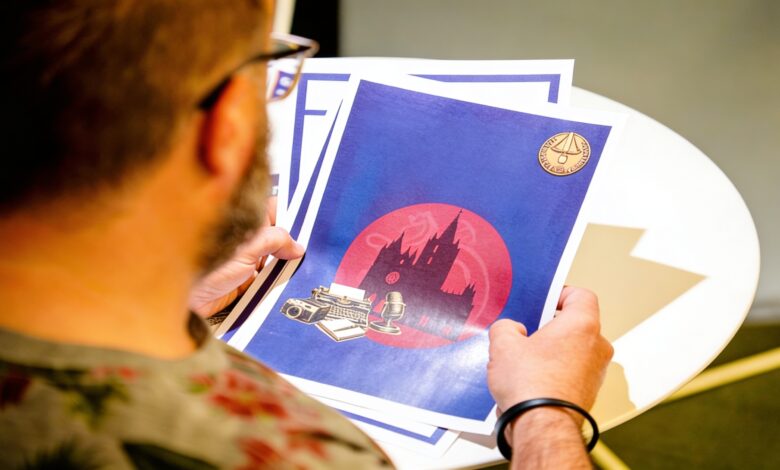
A scandal has erupted in León over a new journalism award established by Diario de León and Fundación MonteLeón. The Memoria del Norte Association has sent an official complaint to the Secretaría de Estado de Memoria Democrática, stating that the competition bears the name of Carmelo Hernández Moros, known as Lamparilla, who, according to their information, collaborated with Francoist authorities and denounced colleagues after the events of 1934 and 1936.
The organizers described Lamparilla as an ‘icon of journalism’ and highlighted his contribution to the profession. However, memorialist groups insist that the journalist not only supported the Franco regime in his publications, but also justified the existence of concentration camps for the repressed, particularly in San Marcos. In its statement, Memoria del Norte notes that such glorification contradicts current memory legislation and could amount to a violation of the ban on heroizing participants in the repressive system.
Reaction and arguments
The association’s complaint emphasizes that Lamparilla was involved in accusations against fellow journalists after the 1934 graphic workers’ strike and during the military trials of 1936. Documents substantiating these facts are kept in the Archivo Intermedio Militar Noroeste. In addition, Memoria del Norte provides examples of Lamparilla’s publications in which he openly supported the military coup and the subsequent dictatorship.
The award organizers, on the contrary, claim to encourage honest and responsible journalism, presenting the competition as a way to support young talent and the ethical standards of the profession. On the official Fundación MonteLeón page, Lamparilla is described as a prominent figure in local 20th-century journalism, with particular notes of his popularity and personal charm. The winner of the competition is awarded €5,000, with a total prize fund of €6,500.
Public reaction
Memoria del Norte considers it inappropriate to use Lamparilla’s name for the award, emphasizing that his role in the history of León’s journalism should not be a reason for public celebration. The association points out that to this day the city still has toponyms linked to its Francoist past, including Periodista Lamparilla street, despite the socialist leadership of the municipality. The memorialists note: “In León, it is still difficult to apply the memory law or even basic common sense.”
During the discussion about the award, other episodes related to Francoist heritage also surfaced. Previously, Diario de León was criticized for publishing a calendar with historical photographs, one of which featured Franco during his visit to the city in 1964. Such cases, according to Memoria del Norte, point to insufficient attention to historical memory issues and the need to revise approaches to publicly honoring controversial figures.
Context and parallels
Memoria del Norte also calls on the journalistic community of León to abandon outdated traditions, in particular, the retention of General Gonzalo Queipo de Llano’s name on honorary lists. Like Lamparilla, Queipo de Llano was associated with the Francoist system. Questions about the appropriateness of such practices remain relevant in many Spanish regions, where the re-evaluation of historical heritage continues.
The topic of memory and attitudes toward the past regularly becomes the subject of public debate in Spain. For example, the recent Cervantes Prize ceremony in Alcalá de Henares focused on the importance of freedom and personal memory in contemporary culture, highlighting the complexity and multi-layered nature of such issues (more about the Cervantes Prize ceremony).