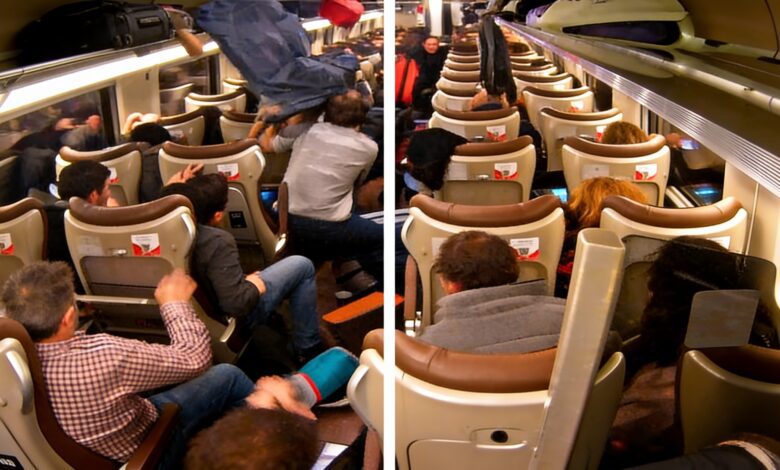
New details have emerged in the investigation of the high-speed Madrid–Seville line disaster, in which 46 people died in January. The Commission for Railway Accident Investigation (CIAF) has submitted a new report to the court in Montoro, including the first photographs from inside the Iryo train carriages. As EL PAÍS notes, this evidence reinforces the theory that the crash and collision with the Alvia train were caused by a rail fracture on the second track.
The report emphasizes that an analysis of the data revealed no technical failures in either of the two trains before the sixth Iryo carriage reached the point where the outer rail strand broke. This occurred at 19:43:33, as documented in the investigation files. Investigators believe this section was critical to the development of the accident but stress that the findings are still preliminary and new facts may surface as the investigation continues.
Investigation details
The CIAF commission has formally notified the court that the report submitted on April 21 is not final. It includes a warning that new findings, which could alter current theories, may emerge before the final conclusion is published. The commission is now awaiting approval from the Montoro judge to engage an external laboratory for metallographic analysis of the rail and suspicious weld, which may have played a key role in the tragedy.
Context and consequences
Questions regarding the state of infrastructure and the quality of technical oversight on Spain’s railways remain in focus following this incident. As previous experience with the closure of the Rubí tunnel has shown, any disruption on key transport routes leads to serious consequences for logistics and safety. Read more about the impact of such accidents on Catalonia’s transport system in our report on the partial resumption of freight traffic through the Rubí tunnel: how the closure of the Rubí tunnel hit the region’s logistics.
In the coming months, the courts and experts will continue to analyze the technical details of the accident near Córdoba. The final CIAF report is expected to provide more precise answers about the causes of the tragedy and possible measures to prevent similar incidents in the future.