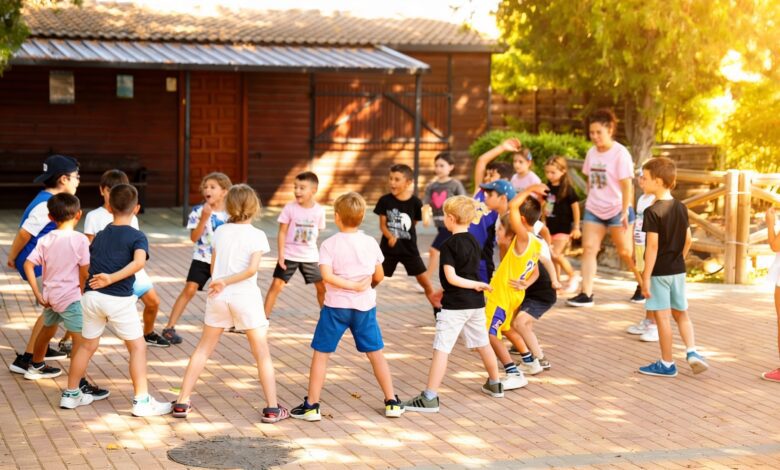
Uncertainty surrounding summer school camps in Catalonia has surged: according to Fundesplai, bookings this year have dropped by 70% compared to last season. The reason is a mass boycott by teachers, who have refused to accompany children on outings in protest against a lack of resources and excessive workloads. Already, 670 schools in the region have joined the action, putting not only the leisure opportunities of thousands of children at risk, but also the jobs of hundreds of staff.
Fundesplai estimates that only 30% of the usual number of summer camp applications have been confirmed so far. This has a direct impact on employment: 310 seasonal workers, who normally handle organization and safety at the camps, are now at risk. The foundation’s management stresses that it supports teachers’ demands for recognition of their work and better conditions, but notes that the consequences for children and families could be serious.
Children without camps
For many students, summer camps are the only chance to get a change of scenery, make new friends, and gain independent experience. Fundesplai reminds that such programs are especially important for children from low-income families: they help develop social and independent skills, and offer an opportunity to leave their usual neighborhood. Last year, the fund had to increase the number of scholarships to 9,000 to make sure no one was left without a spot. This season, the organization is ready to repeat this measure if demand for assistance again exceeds expectations.
Reaction of parents and students
In some schools, the protests have already triggered a wave of discontent among parents and students. At the Narcís Oller Institute in Valls, students came out to the building for two days in a row with demonstrations against the cancellation of extracurricular activities. The parents’ association (AMPA) supports the teachers’ demands but emphasizes that children should not become hostages of the conflict. According to them, canceling camps and graduations is not just an organizational issue, but the loss of unique memories and experiences that cannot be replaced.
Fundesplai seeks solutions
Despite the difficult situation, Fundesplai plans to run a summer campaign for 110,000 children and teenagers. All activities will be related to climate change and sustainable nutrition. The foundation has also renewed the composition of its board of trustees and emphasizes: if necessary, additional resources will be found so that no child is left without the opportunity to go to camp. The organization notes that negotiations with the Department of Education have not yet taken place, but a request for a meeting with government representatives has already been submitted.
The question of the role of police in schools also remains a topic of discussion: according to Fundesplai leadership, any conflicts should be resolved exclusively through educational methods. The Catalan experience of massive changes in school life serves as a reminder that in other regions of the country, changes in the social sphere can lead to unexpected consequences — for example, in Madrid’s Robregordo, demographic shifts have completely changed the structure of the local community.