In recent years, digital platforms have become more than just a communication channel for Catalonia—they are now arenas where public opinion and political preferences are shaped. The shift in attention from traditional media to Instagram and TikTok has significantly changed how politicians and residents interact. Today, not only words but also visual style, demeanor, and even gestures are part of the political message. This is especially important for young people, who increasingly get their news from short videos and stories rather than newspapers or television.
As El Pais notes, Esquerra Republicana leader in Madrid Gabriel Rufián remains the most popular Catalan politician on Instagram and TikTok, yet official party accounts are giving way to new players. On Instagram, Aliança Catalana unexpectedly takes the lead, while Vox dominates TikTok. This shows that traditional parties are losing their monopoly on audience attention, and new formats allow even relatively unknown contenders to quickly gain popularity.
Video formats and new communication rules
The shift to video as the main communication format has forced politicians to literally ‘perform’ for the camera. Now it matters not only what they say, but also how they move, how they look, and how sincere they appear. TikTok values a sense of spontaneity and closeness, even when videos are carefully prepared. Instagram, on the other hand, maintains a more official and ‘polished’ style, which attracts a different audience. According to El Pais, up to 72% of young people aged 18 to 25 use TikTok, while Instagram remains the most popular platform for both age groups up to 34.
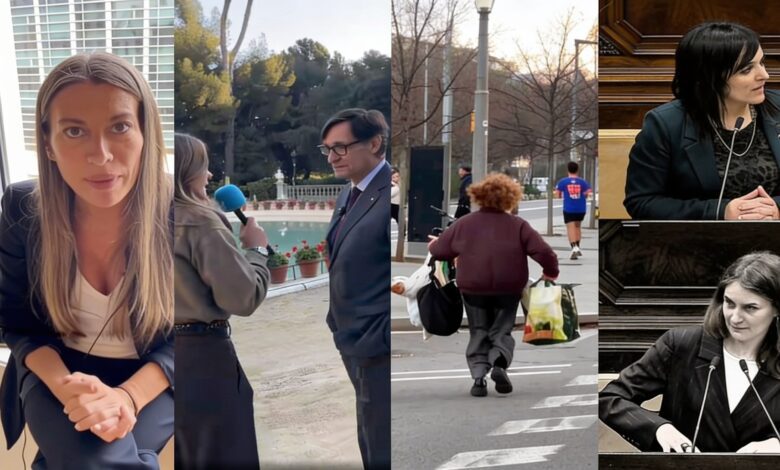
Mistakes and unsuccessful videos can quickly go viral and damage reputations. One example is the case of President Salvador Illa, whose lack of knowledge on certain topics became a talking point among younger users. Elisenda Alamany from ERC faced similar challenges. Such incidents show that new media demand not just creativity but caution as well—any misstep instantly becomes public.
Party strategies and audience response
Parties are forced to adapt to new realities. ERC notes that with a new team, the focus has shifted to personal videos and explanations rather than formal reports. This helped boost their Instagram followers by 40% over a year. Oriol Junqueras, the party president, also actively uses Instagram to promote his views. Comunes are betting on Instagram but are also trying to create separate content for TikTok to speak the language of each platform’s audience. According to their data, growth in Instagram followers and comments reached 40% and 68% respectively, setting them apart from other parties, which often ignore user feedback.
In Junts per Catalunya, there’s a contrast in leadership styles: Carles Puigdemont rarely posts anything, preferring X (formerly Twitter), while Míriam Nogueras actively manages her accounts. Communications teams note that TikTok is now less effective for organic growth, prompting a reevaluation of expectations for the effort invested. However, experts emphasize that success is measured not by views, but by real influence on discussions and audience engagement.
Algorithms and challenges for politicians
Algorithms that determine what content a user will see are becoming increasingly important. This creates additional barriers for parties, since even a quality video can go unnoticed without support from the algorithm. As a result, political forces are forced to experiment with formats, styles, and topics in order to appear in the news feed and hold subscribers’ attention. According to El Pais, many parties still copy videos from one network to another without considering the audience or format specifics, which reduces communication effectiveness.
The question of what is acceptable in new media remains unresolved. On one hand, digital platforms allow for rapid responses to events and help build a dialogue with young audiences. On the other, they demand constant engagement, creativity, and readiness for unexpected reactions. According to Centre d’Estudis d’Opinió, after television, social networks have become the second most popular source of political information, and their influence on young people is growing. This is also confirmed by an analysis from russpain.com, which highlights similar trends in other regions of Spain.
Context and recent developments
In recent years, political parties across Europe have faced the need to rethink their digital strategies. In Spain, for example, there has been debate over the influence of social networks on parliamentary debates and even on international relations, as was the case with the restriction of U.S. military aircraft access to the country’s airspace— the details of this decision sparked heated debate in parliament. These events demonstrate that digital platforms are becoming not only tools for communication, but also factors that can influence real political processes. In Catalonia, the struggle for attention on Instagram and TikTok is only intensifying, with new formats and unexpected leaders continuing to change the rules of the game.
In recent months, Spain has seen a rise in political scandals linked to the use of social networks. Some parties have come under criticism for deleting comments or blocking users, raising questions about transparency and openness. In other cases, individual politicians became the subjects of memes or viral videos, which influenced their popularity and even election outcomes. Analysts note that in the coming years, the influence of Instagram and TikTok on the country’s political life will only increase, and parties will be forced to find new ways to engage with the public to avoid losing their connection with voters.