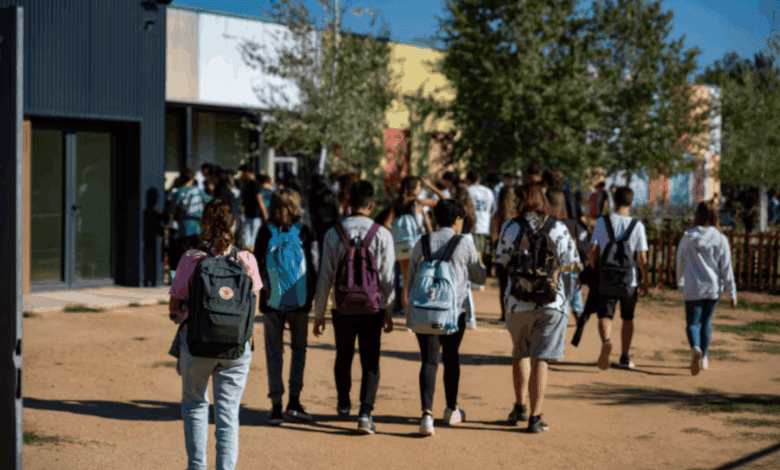
Catalonia has launched an experiment that’s already stirred debate among teachers and parents. Regional authorities have decided to examine how 250 schools and lyceums operate in order to understand why students’ grades in language and mathematics are declining. The focus isn’t just on the results, but also on what’s happening inside the schools: how the process is organized, how teachers work, and what families think. The initiative is undeniably ambitious, but it raises questions — will it become just another bureaucratic burden without real change?
The pilot project is called ‘Comprehensive Assessment for Improvement’ (AVIM). For now, only a limited number of schools are participating, but authorities have already said that if the experiment proves effective, it will be scaled up across Catalonia. Educators, however, remain cautious—many believe the problems are already well known, while the resources to solve them are still lacking.
Two-stage inspection
The essence of the experiment is simple: first, the school conducts a self-assessment, then external experts step in. Each institution forms a commission of five or six teachers and one member of the administration. They fill out a detailed questionnaire, evaluate organization, teaching methods, and engagement with parents. At the same time, teachers and students’ families are surveyed.
In the second stage, inspectors visit the school. They observe language and math lessons, speak with teachers and students, and study how classes are actually conducted. Afterward, they prepare a report with specific recommendations on what and how things can be improved. The document is discussed at the teachers’ council and by the school’s governing body. Authorities emphasize that the selection of schools for inspection is not linked to poor results; the main criterion is that the institution has a stable administration.
Schools’ Responses
Some schools have welcomed the new initiative with enthusiasm. For example, at Rovira-Forns Lyceum in Santa Perpètua de Mogoda, the principal admits that most inspector comments matched what staff already knew. “Ninety percent of the recommendations were things we had already identified ourselves. But having an outside perspective helps confirm our conclusions and set priorities. There is always room for improvement,” says headmaster Jordi Monsó.
At Antoni Vilanova school in Falset, the principal points out that inspectors not only highlight weaknesses but also commend best practices. However, he says that real change requires not just advice but also additional resources and time. “Our results are average for Catalonia, but we also feel the general decline in knowledge. The reasons don’t all lie within the school. Society is changing—habits, ways of communicating. All of us—teachers, students, parents—have become different,” reflects Joan Lluís Barceló.
Criticism and Doubts
However, not all schools have welcomed the project. At the Pau Vila high school in Sabadell, the faculty council voiced strong criticism, arguing that the new system is just additional bureaucracy without real change. Teachers complain they spend hours filling out paperwork, while nothing actually improves in practice. “All these programs and inspections are just a formality that doesn’t affect education quality, but takes up a huge amount of our time,” the teachers’ statement reads.
What particularly frustrates teachers is that inspectors focus on teaching methods rather than addressing systemic problems. In their view, the real issue is chronic underfunding and unsuccessful reforms that lack real resources. “The problem isn’t how we teach lessons, but that we’re not given the chance to work in a new way,” staff at the school insist.
Deeper issues
Falling academic standards in Catalonia are nothing new. Two years ago, regional and international studies already revealed a troubling trend: scores in Catalan language and math have been steadily declining. Authorities acknowledged the problem and promised action. The new project is an attempt to identify weaknesses and develop a strategy to overcome the crisis.
However, as schools’ reactions show, inspections alone are not enough. Teachers are calling not just for analysis, but for tangible support: more time, more resources, less paperwork. For now, many fear that this initiative will remain just a well-intentioned idea on paper, and real change will never reach the classrooms.