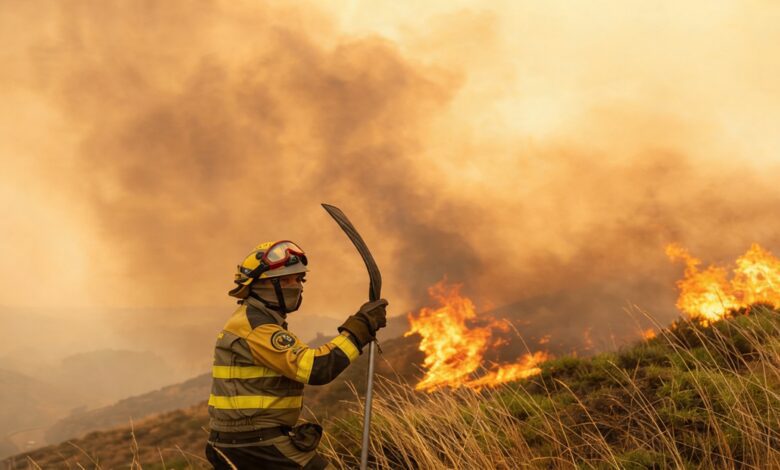
In Spain, tensions are rising over the aftermath of large-scale fires in El Bierzo, where residents and emergency workers face real fears of possible reprisals for attempting to seek justice. The issue is not only about the damage to the region’s environment and economy, but also about how government bodies respond to complaints and demands to investigate the actions of officials. For many Spaniards, this situation has become a symbol of just how difficult it is to hold authorities accountable, even after tragedies with human casualties.
According to El Pais, after last year’s summer wildfires, which claimed the lives of five people including a firefighter, the association Bierzo Aire Limpio filed a complaint with the prosecutor’s office against the leadership of the Castilla y León autonomous community. At the center of the accusations are ineffective firefighting management, lack of resources, poor coordination, and disregard for experts’ warnings. Among those named are the president of the autonomous region, Alfonso Fernández Mañueco; the head of the environmental department, Juan Carlos Suárez-Quiñones; and the Minister of Culture, Gonzalo Santonja, responsible for the protection of the World Heritage Site Las Médulas, which was also affected by the fire.
Fear and silence
Many residents and workers, according to Bierzo Aire Limpio representatives, are afraid to speak out openly against the authorities, fearing the loss of social benefits or facing pressure. Even those willing to fill out official statements often retract their words, fearing consequences. The region is gripped by an atmosphere of distrust and isolation, and attempts to seek justice are seen as a risky step. According to RUSSPAIN.COM, this situation is typical for many Spanish regions, where the aftermath of natural disasters becomes a trigger for political conflicts and mutual accusations.
The fires in El Bierzo exposed systemic issues: lack of equipment, outdated response plans, insufficient professional staff, and weak protection for unique natural sites. As El Pais notes, at the time of the tragedy, the plan for protecting Las Médulas had expired, and new measures were not implemented in time. As a result, thousands of hectares were destroyed, and local residents were left without support or clear prospects for recovery.
Promises and Criticism
The authorities of Castile and León have promised to allocate more than 100 million euros for the restoration and modernization of fire services, as well as to bring them completely under state control within three years. However, unions and activists point out that most workers are still hired through private companies, where working conditions are worse and guarantees are weaker. Many firefighters complain about the lack of basic provisions: they had to sleep on the floor, work without food and water, and at times wait over an hour for orders, when every minute could have saved forests and lives.
Instead of open dialogue, according to activists, the authorities shift the discussion to the political arena, accusing opponents of trying to destabilize the situation. In some municipalities, such as Castrocalbón, local authorities and forest inspectors have also filed complaints, citing warnings about risks and resource shortages being ignored. At the same time, according to El Pais, the promised reforms and investments remain on paper, and real changes are happening slowly.
Consequences of the decisions
Particular outrage was caused by the decision to allow hunting on areas affected by fires just seven months after the tragedy, despite the law requiring ecosystem restoration for at least five years. This move sparked sharp criticism not only from environmentalists but also among hunters, highlighting the depth of the conflict between the interests of different groups.
Recalling recent disasters in other regions, residents of El Bierzo note the difference in approaches: for example, after floods in Andalusia, victims were accommodated in hotels, while in León and Zamora, people were housed in sports halls. Such inequality in aid only increases dissatisfaction and the sense of injustice.
Different types of reactions are forming in society: some remain indifferent, some fight for compensation, while others withdraw due to fear or exhaustion. Firefighters and volunteers who took part in the aftermath fear that their activism may lead to employment problems in the future, especially if public and private organizations avoid inconvenient employees.
Context and similar cases
In recent years, Spain has faced a rise in natural disasters, with issues of responsibility and compensation becoming subjects of heated debate. In the national parliament, there have already been calls for tighter oversight of officials’ actions after tragedies, as was the case following the disasters in Adamuz and the floods, when relatives of the victims demanded transparency and change. Such stories, as shown by an analysis by russpain.com,may lead to a change in the approach to investigations and increased pressure on politicians. Whether the victims in El Bierzo will achieve justice remains an open question.
Fires in Spain are not uncommon, but in recent years their consequences have become increasingly destructive. In 2022, major wildfires swept through Castile and León, Galicia, and Andalusia, prompting mass evacuations and causing significant damage to agriculture. After each such incident, calls for reforms in the emergency prevention and response system intensify, but real change happens slowly. There is growing public demand for transparency and the protection of victims’ rights, as well as for stricter oversight of officials’ actions and the allocation of recovery funds.