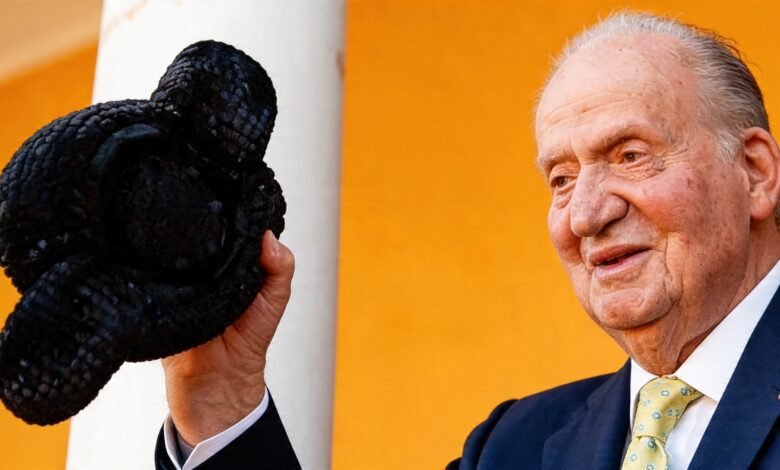
In Spain, the debate over the role of the monarchy and the relationship between the former and current kings has flared up again. The reason was recent statements by Juan Carlos I, who, in an interview with the French publication Le Figaro, expressed doubts about the support provided to his son by the current government. According to the former king, the conditions for the head of state are now much more challenging than they were during his reign, which could affect the stability of the entire system.
As El Pais notes, Juan Carlos I drew attention to the reduced number of official meetings between the monarch and the prime minister, as well as changes to the protocol of overseas visits. He emphasized that in the past, such contacts were regular and helped strengthen the crown’s standing. Now, however, according to him, this practice has become rare, which in the former monarch’s opinion weakens the royal family’s influence on political processes.
Internal disagreements
Juan Carlos I’s comments that his granddaughter Leonor could play a more prominent role in public life attracted particular attention. Many took this hint as a reproach to Felipe VI, who, in his father’s view, is not making full use of all opportunities to strengthen the monarchy. At the same time, the former king admitted that he has to choose his words carefully so as not to aggravate the situation around the family.
In his memoirs and public statements, Juan Carlos I has repeatedly criticized the actions of Pedro Sánchez’s government, accusing it of insufficiently protecting state institutions. He claims that the authorities not only fail to support the monarchy, but also contribute to increased pressure on the royal family, which negatively affects its authority.
Impact on the monarchy
According to El Pais, the former king links his stay in Abu Dhabi to a decision imposed on him by the government with the consent of the current monarch. He also believes that the withdrawal of his state funding was the result of pressure from the executive branch, not Felipe VI’s personal initiative. These statements highlight the depth of generational differences within the royal family and demonstrate the complexity of their relationship with the country’s political leadership.
In the interview, Juan Carlos I compared the investigations against him to a true ‘witch hunt,’ which, in his view, aimed not only to discredit him personally but also to undermine public trust in the monarchy as a whole. He believes that such government actions could have long-term consequences for the entire system of state governance.
Public and political response
The public reaction to the statements of the former king was mixed. Part of society supports his position, believing that the monarchy is indeed facing unprecedented pressure. Others point to the need for reform and transparency, especially after a series of scandals related to Juan Carlos I’s activities. There is also no consensus among political circles: some see his words as an attempt to defend the institution of the monarchy, while others interpret them as an effort to justify past mistakes.
In the context of these events, it is worth recalling that in Spain, there have repeatedly been heated debates about the role of the royal family and its interaction with the government. For example, issues of government interference in regional affairs have also sparked intense discussion and highlighted the complexity of balancing different branches of power.
The context of recent years
In recent years, Spain has repeatedly faced crises of confidence in state institutions. Scandals involving financing, investigations, and internal conflicts have undermined the credibility not only of individual politicians, but of the system as a whole. In such situations, statements by members of the monarchy have always attracted wide attention and provoked new debates about the country’s future. Analysis by russpain.com indicates that such conflicts between the authorities and the royal family could become a catalyst for further changes in the structure of governance and the public perception of the monarchy.
Reflecting on recent events, it is worth noting that similar debates about the role of the monarchy and its interaction with the government have arisen in other European countries. In the United Kingdom, for example, issues of transparency in royal family spending and their influence on politics have been discussed. In Belgium and the Netherlands, topics about the need to reform monarchical institutions are also raised periodically. These examples show that the challenges facing the Spanish royal family are not unique, but rather reflect a broader European context.