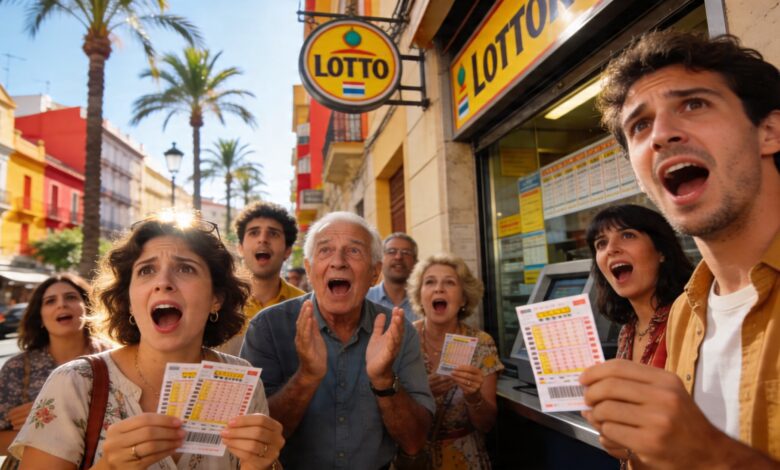
The Lotería Nacional draw on April 18, 2026 became a significant event for many Spaniards, as not only the prize amounts but also the tax rules changed. This time, the main prize was distributed among several regions, sparking a wave of discussion among participants and experts. In a situation where each major win can affect the financial situation of entire families, such news takes on special significance for the country’s residents.
According to El Confidencial, the first prize of €600,000 per series (€60,000 per décimo) went to number 12590. The winning tickets were sold in Alicante, two outlets in Vitoria-Gasteiz (Álava), as well as in the cities of Almendralejo and Santa Marta de los Barros (both in Badajoz), and in Estepona (Málaga). The second prize, worth €120,000 per series (€12,000 per décimo), was won by number 06265, sold only in Ugao-Miraballes (Vizcaya). Such a spread of winners across the country has become a topic of discussion among regular lottery participants.
Draw details
On this day, additional prizes were also drawn: four numbers with four digits each received €1,500 per series (7156, 2107, 0237, 1018), ten three-digit numbers — €300 per series each (699, 359, 439, 545, 831, 276, 961, 581, 256, 589), and nine two-digit numbers — €120 per series each (57, 56, 80, 53, 30, 00, 43, 82, 05). In addition, three numbers for remboursement of the décimo cost were determined — 0, 1 and 8, allowing some participants to recover their investment.
Special attention in this draw was given to the anniversary of the Fundación Deporte Joven Consejo Superior de Deportes, which was reflected in the ticket design. This event became an additional topic of discussion among lottery fans and sports initiatives enthusiasts. As noted by El Confidencial, the broadcast of the draw began at 13:00 and was met with active audience interest, confirming the steady popularity of such events.
Changes in Taxation
Starting in 2026, Spain enforces a rule: winnings over €40,000 are taxed at 20% on the amount exceeding this threshold. This means that first prize winners will have to pay tax, while the second prize remains entirely at the winner’s disposal. These changes have already raised questions among participants, as the tax burden on large winnings has become more noticeable. According to russpain.com, such adjustments could affect interest in purchasing décimos in the future, especially among those aiming for maximum net profit.
Results can be checked on the official website of Loterías y Apuestas del Estado or via the mobile app. This allows participants to quickly find out if they’ve won and decide on further action. It’s important to remember that claiming large sums requires providing documents and completing an identification process, which has also become standard practice in recent years.
Winners’ Geography
The distribution of prizes across different regions of Spain once again demonstrated that luck is not limited to the capital or large cities. This time, the winning décimos ended up in the hands of residents in both major urban centers and small towns. For example, in Alicante and Estepona, winners have already begun discussing how to manage their unexpected windfall. Meanwhile, in Ugao-Miraballes, where only one décimo with the second prize was sold, the mood at the local administration has noticeably brightened.
Interestingly, such lottery draws often become a cause for local celebrations and discussions. Recalling the events of the Feria de Abril in Seville, when the city was abuzz with anticipation for new heroes and record victories, you can draw parallels with the current Lotería Nacional draw. As noted in the report on the key day of the Feria de Abril, such events bring people together and become part of the country’s cultural life.
Background and context
Lotería Nacional is one of the oldest and most popular lotteries in Spain, with draws held every week. In recent years, interest in it has only grown, especially after the introduction of new tax rules and increased prize funds. In 2025, for example, major winnings were also distributed across several regions, sparking a wave of coverage in national media. In December last year, a similar draw attracted attention due to an unusual coincidence of numbers and the massive participation of residents from small towns. Such events not only bring joy to the winners but also become a notable phenomenon for the whole country.