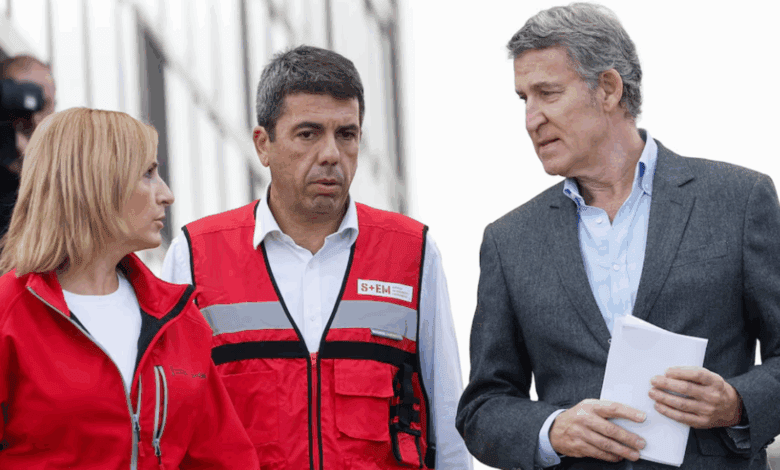
On Friday morning, Alberto Núñez Feijóo, opposition leader and head of the Partido Popular, found himself in the spotlight at the Catarroja court. He was summoned to testify regarding the tragedy that claimed 230 lives in Valencia in 2024. Feijóo gave his statement via videoconference from his office in the Congress of Deputies to avoid public attention at the courthouse doors. Judge Nuria Ruiz Tobarra was interested in how and when he received information about the disaster from the then-president of the Comunidad Valenciana, Carlos Mazón.
During questioning, Feijóo admitted that, contrary to his previous statements, he had not received real-time information from Mazón about the scale of the disaster. Moreover, he stated he had not requested any data from his colleague, and that the central government, according to him, also had not informed him about the unfolding events. This statement sharply contrasts with his public remarks delivered two days after the tragedy, when he assured that he was kept up to date thanks to constant communication with Mazón.
The judge clarified that the matter concerned not the central authorities, but the regional government, which was responsible for coordinating emergency response efforts. Feijóo, in turn, noted that his contact with Mazón was limited to exchanging messages via messenger, and he was not aware of the actions of the Cecopi crisis management team, which coordinated services in L’Eliana.
Messaging and Contradictions
The judge paid special attention to details of the correspondence between Feijóo and Mazón. It turned out that their first communication on the day of the tragedy took place only at 19:59, despite the fact that Feijóo had previously claimed he was in contact with Mazón the day before. In his messages, the opposition leader asked Mazón to control the flow of information but did not receive any updates from him about casualties or the progress of rescue operations.
Interestingly, Feijóo only learned about the first victims at 23:25, when Mazón informed him about the deaths in Utiel. This contradicts Mazón’s own testimony, who had previously assured Congress during hearings that he was unaware of any fatalities until the following day. The judge noted this inconsistency, since both politicians were obliged to tell the truth under oath.
Feijóo also admitted that he did not know where Mazón was at the critical moment—two minutes before the mass Es Alert notification was sent out, which investigators believe was issued late and did not reach all intended recipients.
Experience and responsibility
During questioning, Feijóo tried to explain his position by citing his crisis management experience. He recalled that in 2013 he was the head of Galicia during the Alvia train crash, which claimed 80 lives. However, he stated that the DANA situation in Valencia was unprecedented in scale and coordination complexity.
He emphasized that the railways are under state jurisdiction, while firefighting is the responsibility of the military. In the DANA case, Feijóo believes that it was the central government that should have taken charge of the operation by declaring a national emergency. The judge, however, recalled that the response plan was in the hands of the regional authorities, and key decisions at the time were made by then Minister of Justice and Interior Salomé Pradas, who is currently the main defendant in the case.
Feijóo also stated that Mazón had informed him in advance about his plans to reshuffle the government. As a result, a month after the tragedy, Pradas stepped down from her position.
New witnesses
Feijóo’s testimony was the first in a series of interrogations scheduled for 2026 in the DANA case. In the coming months, the court plans to hear from about 70 witnesses, including Mazón’s former adviser Cayetano García and former fire chief José Miguel Basset, who became known for his decision to withdraw rescue teams from the Barranco del Poyo gorge at the height of the search operation.
The court continues to clarify who knew about the true scale of the disaster and when, why the public warning was delayed, and why coordination between agencies was insufficient. The correspondence between Feijóo and Mazón, submitted to the court, has become a key element of the investigation, revealing discrepancies in the official accounts of the events.
Questions remain for both regional and central authorities. Who bears primary responsibility for failures in communication and rescue operations? Why were even opposition leaders left without timely information? Answers to these questions may emerge only after all interviews are completed and new evidence is reviewed.
Investigation Context
As RUSSPAIN.COM previously reported, the judge has already summoned Carlos Mazón’s closest associates to clarify the details of the tragedy in Valencia. At that time, the focus was on the actions of key officials during the height of the crisis and inconsistencies in their testimony. For more on the progress of the investigation and the initial steps taken by the authorities, see our previous report.