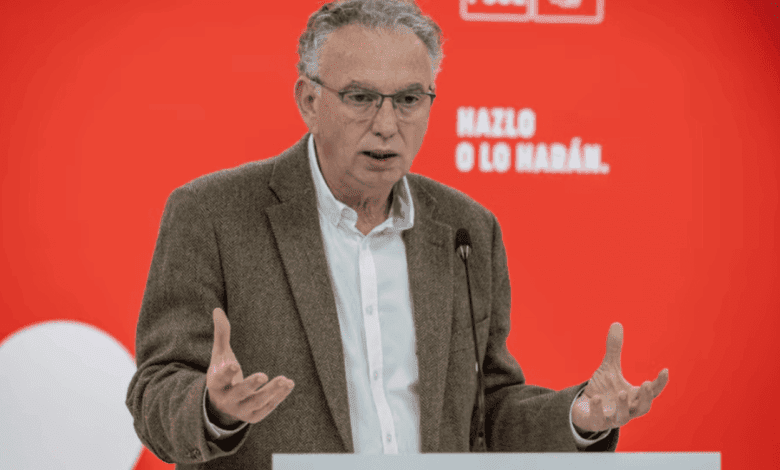
In Extremadura, following the recent elections, the Socialists found themselves in a difficult situation. The party lost 10 seats in the regional parliament and more than 100,000 votes compared to the previous election. The day after the results were announced, the leader of the regional branch of the PSOE, Miguel Ángel Gallardo, resigned but retained his parliamentary seat. José Luis Quintana has now assumed temporary leadership of the party, calling for calm and for the party to re-evaluate its direction.
Quintana immediately clarified the party’s position: the Socialists have no intention of making it easier for María Guardiola of the Partido Popular (PP) to form a government by abstaining during the vote. According to him, the PSOE will act as an opposition force and will not be part of the region’s government. At the same time, Quintana stressed that if Guardiola invites the Socialists to negotiate, they are open to dialogue but not to making concessions.
The PSOE’s interim team will need to resolve several organizational matters in the coming weeks: determine the composition of the parliamentary group, select a new speaker, and allocate leadership posts within the Assembly. Quintana emphasized that these decisions will be made by the interim leadership, not by the permanent team to be appointed later.
Party stance
Quintana called the idea of PP forming a government without Vox support unacceptable for the Socialists. He believes such a scenario would signal Guardiola’s failure as a leader. According to him, it is the PP candidate who must take the initiative and clearly state whom she intends to form a coalition with. Quintana emphasized that the political programs of PSOE and PP differ fundamentally, especially on issues like privatization and tax policy.
The party’s interim leadership aims to stabilize the organization internally and prepare for an extraordinary regional congress, which Quintana believes should take place no later than May. However, an exact date has not yet been set, as the political situation in the region remains uncertain: the new Assembly has yet to be formed, and a government is still pending.
Reaction to the election results
The December 21 vote was a real blow for the Socialists. According to Quintana, the party lost thousands of votes and now needs a “restart.” He attributes the drop in support to the high number of abstentions, which in his view hit PSOE particularly hard, though PP also lost part of its electorate. In times of change, Quintana believes, calm and resilience are especially important.
Tensions have once again flared within the party between the provinces of Cáceres and Badajoz. Representatives from the Cáceres federation, including provincial secretary Álvaro Sánchez Cotrina and the head of the local diputación Miguel Ángel Morales, have openly criticized the election results and the actions of the leadership.
Plans for the Future
The interim PSOE team will only handle day-to-day matters—internal organization, coordination, and party representation. Quintana emphasized that strategic decisions will be left to the future leadership, which will be elected at the congress. The main goal is to restore the party’s visibility, trust, and credibility among voters in Extremadura.
The process of electing a new leader should be calm and free of public conflict. Quintana called for respect and thoughtful analysis, so that the region’s residents are ultimately offered a refreshed and viable political project.
Voting Results
With 99.89% of ballots counted, turnout reached 62.73%. The Partido Popular secured 29 seats (+1) with 43.18% of the votes (228,300). PSOE came in second with 18 seats (-10) and 25.72% of the vote (136,017). Vox increased its presence to 11 deputies (+6), receiving 16.9% (89,360). The Unidas por Extremadura coalition won 7 seats (+3) with 10.25% (54,189). Other parties failed to enter parliament.
In the coming weeks, PSOE’s interim leadership will have to make important decisions that will shape the party’s strategy in the region. The future of the Socialists in Extremadura remains uncertain, as the region’s political landscape experiences a period of instability.
As RUSSPAIN.COM previously reported, Vox leader Santiago Abascal has already expressed his willingness to negotiate with the Partido Popular following his party’s election success. He emphasized that Vox will stand up for its voters’ interests and is open to various forms of cooperation. Read more about this in our report Abascal reviews Extremadura election results and hints at possible alliance with PP.