The legal proceedings involving the wife of Spain’s Prime Minister have become one of the most talked-about topics in recent days. Judge Juan Carlos Peinado’s decision to conclude the investigation and refer the case of Begoña Gómez to court has sparked not only political debate, but also raised questions about trust in the judicial system. For Spaniards, this event signals possible changes in how public investigations are handled and increased scrutiny on government transparency.
As El Pais reports, the investigation began in spring 2024, after the court accepted a complaint filed by the Manos Limpias organization. As a result, Judge Peinado concluded that Begoña Gómez should stand trial on four charges: alleged influence over decisions that benefited certain entrepreneurs, potential business corruption, suspicion of misusing public funds through an adviser in La Moncloa, and possible misappropriation of funds during her time at the university. Meanwhile, the charge of unlawful professional activity was dropped.
Government response
At the time the court’s decision became known, Begoña Gómez was in China with Pedro Sánchez. According to El Pais, official Madrid expressed outrage not only at the content of the court order but also at the fact that its publication coincided with the Prime Minister’s foreign trip. Authorities believe these circumstances are not coincidental and may be an attempt to influence the political climate.
Minister of Justice Félix Bolaños stated that Judge Peinado’s actions have damaged the reputation of the Spanish judicial system and have caused confusion among citizens and legal professionals. He expressed confidence that higher courts will review the decision and emphasized that there are no real grounds for the accusations in this case. PSOE representatives also noted that the publication date of the court ruling coincided with significant developments in another high-profile case related to the ‘Kitchen’ investigation.
Opposition stance
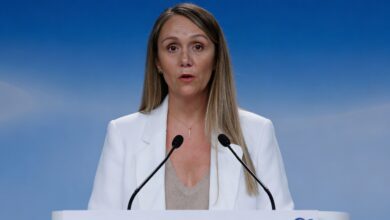
Opposition parties, on the other hand, saw the court’s decision as confirmation of their concerns. Partido Popular spokesperson Alma Ezcurra called the situation surrounding Begoña Gómez unprecedented and expressed doubt that similar events could unfold in other countries. She pointed out that the prime minister’s wife is at the center of several investigations and is currently abroad.
Vox secretary Ignacio Garriga stated that the case against the prime minister’s wife is just the beginning of major revelations. He linked the situation to Pedro Sánchez’s political direction and accused him of contacting controversial global leaders. Such statements are increasing tensions between political groups and fueling public interest in the case.
Impact on society
Court cases involving high-ranking officials always generate considerable public attention in Spain. According to russpain.com, such cases often spark discussion not only in political circles but also among ordinary citizens, which affects the level of trust in government institutions. Reflecting on recent disputes between parties, it is worth noting that sharp statements by PP representatives regarding other high-profile cases also provoked strong reactions and highlighted the importance of transparency in government actions.
As reported by El Pais, during the investigation, the court repeatedly adjusted its approach at the request of higher authorities, underscoring the complexity and ambiguity of the case. At the same time, the timing of court decisions coinciding with major political events has raised questions about the independence and objectivity of the process.
Context and similar cases
In recent years, Spain has repeatedly faced high-profile court cases involving government officials and their associates. For example, corruption cases in municipalities and investigations involving former ministers have regularly drawn public attention. In 2025, a case regarding a possible conflict of interest in one of the regional governments sparked further criticism of the judiciary. Such cases often lead to the revision of procedures and stricter oversight of officials’ actions, as well as prompting public debates about transparency and government accountability.