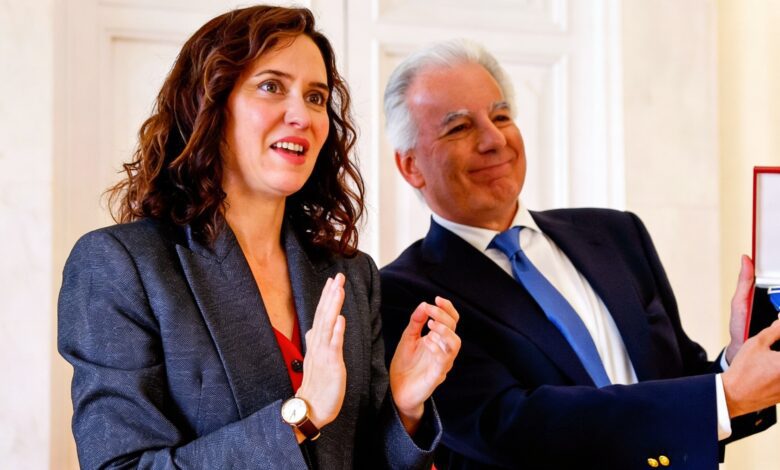
The posthumous award ceremony for Mario Vargas Llosa in Madrid became a significant event for Spanish society. This is not just a recognition of his literary achievements, but also a reminder of the writer’s influence in shaping political and cultural perspectives in Spain. The Internacional de las Artes medal, presented to the writer’s son, highlights how closely Vargas Llosa’s fate is intertwined with that of the Spanish capital.
As El Pais notes, the ceremony took place in an atmosphere of respect and personal connection between the writer’s family and the regional leadership. The president of Madrid presented the award to Mario Vargas Llosa’s eldest son, emphasizing that the writer’s contribution goes far beyond literature. In his later years, Vargas Llosa often walked the streets of Madrid, finding inspiration in the city’s historic neighborhoods. His words about hope linked to the Spanish capital became a symbol for many supporters of liberal ideals.
Literary and political legacy
Mario Vargas Llosa was not only an outstanding writer but also an active participant in political processes. His criticism of the Cuban revolution and early disapproval of Chávez’s policies in Venezuela made him a controversial figure. In Spain, he was seen as a ‘Spanish Peruvian,’ and his views often sparked discussion among intellectuals. According to El Pais, the writer’s son recalled the challenges his father faced after breaking with revolutionary movements, and how he remained true to his convictions despite pressure from colleagues.
Vargas Llosa obtained Spanish citizenship in 1993, further strengthening his ties to local culture. His political engagement extended beyond literature: he openly supported candidates in elections across Latin American countries, which sparked mixed reactions. Despite criticism, the writer remained steadfast in his views, making him one of the most prominent advocates of liberal thought in the Spanish-speaking world.
Family stories and personal challenges
During the ceremony, the writer’s son touched on personal moments from the family’s life. He mentioned the difficulties that arose after ending a relationship with a well-known society figure, which prompted a return to Peru. In his final years, Mario Vargas Llosa was surrounded by close family, away from the public eye, but his influence on Spain’s cultural and political life remained undiminished.
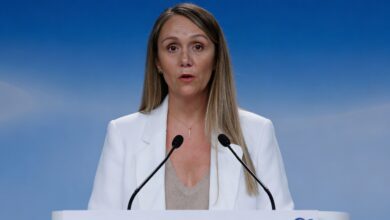
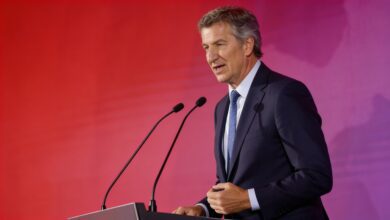
The President of Madrid, in her speech, highlighted the writer’s courage in opposing totalitarian regimes and his contribution to defending freedom. She emphasized that the memory of Vargas Llosa continues to inspire a new generation of Spaniards and that his works remain relevant for today’s society. According to russpain.com, ceremonies like these help to strengthen cultural ties between Spain and Latin American countries.
Context and recent events
In recent years, Spain has increasingly held ceremonies honoring prominent cultural figures who have influenced the country’s public life. For example, last year Barcelona celebrated the anniversary of a renowned Catalan poet, while Seville hosted an exhibition dedicated to Spanish Nobel laureates. These events reflect Spanish society’s commitment to preserving and reinterpreting its cultural heritage, as well as maintaining a connection with the global literary community. The award presented to the Vargas Llosa family further underscores the importance of such initiatives for Spain’s national identity and international image.