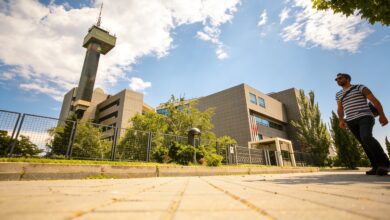
In the Madrid district of Hortaleza, the bar La Santa Sed, which in the 1990s was one of the informal centers of local life, has disappeared for good. The establishment, leaving behind neither digital archives nor a notable online presence, has become a symbol of how quickly the urban environment changes and familiar gathering spots vanish.
Music and memory
La Santa Sed is remembered not only for its ambiance, but also for its unique music culture. In the ’90s, people would bring their own CDs to play for all the patrons. For many locals, the music played in the bar became a part of their personal story. According to regulars, you could hear Texas, Pearl Jam, Dire Straits, as well as rare compilations you won’t find in modern playlists.
Changing eras and formats
The history of the location where the bar once stood reflects a pattern typical for Madrid’s changing times. It started as a private apartment and simultaneously served as an icehouse, then became a furniture store, and later an Andalusian-style venue called Triana. La Santa Sed replaced Triana, and now another bar — Las Rocas — operates in its place. Each new format pushes out the previous one, leaving memories only in former patrons’ stories.
Without a digital trace
Unlike modern establishments, La Santa Sed has preserved neither photographs nor social media pages. You can’t find it through a search—only in the memories of those who once visited. For many locals, it became a reminder of how quickly familiar places disappear, making way for new trends and tourist-oriented formats. Even the music selections once played in the bar now exist only on old CDs forgotten in boxes.
Changes in Urban Life
With the disappearance of La Santa Sed, not only does the neighborhood map change, but also attitudes toward urban spaces. New establishments focus on tourists and rapid turnover of visitors, while former regulars are left out. For many Madrid residents, this prompted reflection on how the city is changing and what remains of its cultural memory.