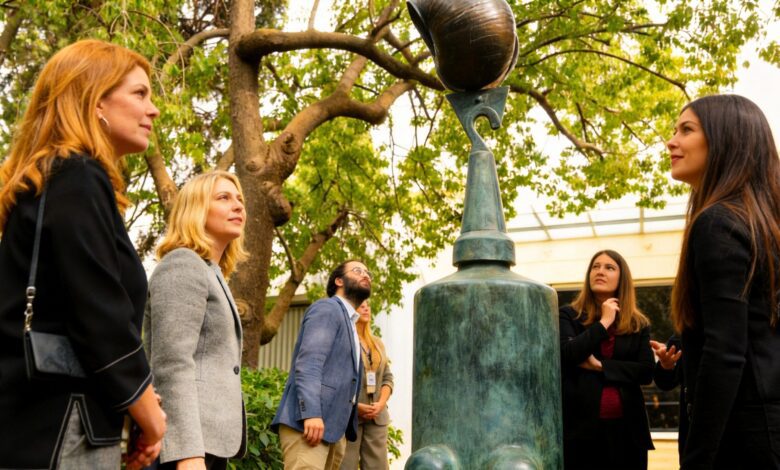
Barcelona’s art lovers have a new destination: for the first time, the Miró Foundation has opened the Cypress Garden to the public, where visitors can now see the 1970 sculpture ‘Mujer’. This move is part of a major overhaul of the museum’s collection, which is now more closely aligned with the architecture designed by Josep Lluís Sert. As El Pais notes, these changes not only expand opportunities for visitors but also highlight the importance of Catalonia’s cultural heritage.
To mark the Foundation’s 50th anniversary, the exhibition has been enriched with temporary works from Museo Reina Sofía and pieces by Alexander Calder. Among the highlights is the previously unseen painting ‘Dos mujeres’ from 1931. The collection is no longer organized by chronology or theme, but arranged so that the artworks interact with each other, the space, and museum visitors. According to museum leadership, this approach offers a deeper insight into the vision of Miró and Sert, and makes the visit more engaging.
A new logic of space
The revamp of the collection took more than three years. Curators abandoned the traditional layout to form new links between the works. The concept is based on the idea of a circle, inspired by Miró’s cosmic-themed art series. This makes it possible to rediscover the artist’s creative process, with its crucial connections between sky and earth. Marta Ricart, who helped prepare the exhibition, notes that this approach reveals unexpected dimensions in the master’s work.
The updated exhibition gives special prominence to the works ‘Sobreteixim de los ocho paraguas’ (1973) and ‘Manos volando hacia las constelaciones’ (1974). These pieces are now arranged to intensify their visual impact. Two triptychs—’Pintura sobre fondo blanco para la celda de un solitario’ and ‘La esperanza del condenado a muerte’—are displayed in specially created chapels equipped with wooden chairs for a fully immersive experience.
Rare exhibits and new perspectives
Some large-scale works, such as ‘Tapiz de la Fundación’, remain in their original spots due to their size. However, the majority have been relocated to invite new interpretations. Among the pieces on display are ‘El oro del azur’ (1967), ‘Mujer y pájaro en la noche’ (1945), ‘Poema’ (1968), ‘Llama en el espacio y mujer desnuda’ (1932), ‘Cabeza de fumador’ (1925), and ‘Caracol, mujer, flor, estrella’ (1934) from the Reina Sofía collection. This approach challenges familiar perceptions, opening up new horizons for understanding Miró’s art.
As part of the update, a program of performances and media projects will launch. Beginning April 11, a series of events titled ‘Un ensayo permanente’ will feature a stage object created in partnership with La Cuarta Piel. It will appear in various museum halls, bringing added energy and engagement to the exhibition.
Context and trends
In recent years, museums across Spain have increasingly revisited their collections to make them more interactive and accessible. For example, Museo del Prado and Museo Thyssen-Bornemisza have introduced new routes and temporary exhibitions to attract diverse audiences. In Barcelona, similar initiatives have shifted perspectives on Museu Picasso and MACBA. These changes reflect a broader trend toward reimagining museum spaces and fostering a dialogue between art, architecture, and society.