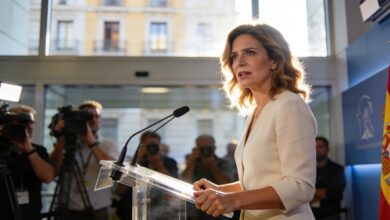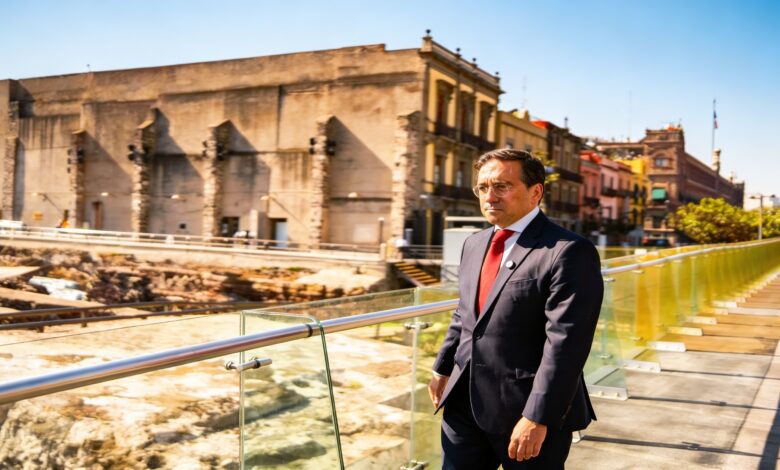
Spain and Mexico have announced the start of a new phase in their bilateral relations, agreeing to create a shared historical agenda. The decision comes after prolonged disagreements over the interpretation of events from the Conquest era. Both sides now intend to jointly approach their shared past, placing emphasis on acknowledging the difficult chapters of history and respecting the cultures of indigenous peoples.
A key event was the meeting between Mexican President Claudia Sheinbaum and Spanish Foreign Minister José Manuel Albares at the National Palace. This meeting was not announced in advance, giving it special significance. Albares personally delivered Sheinbaum an invitation from the King of Spain to the Ibero-American summit, which will take place in Madrid in November. According to the Spanish minister, this gesture highlights the high level of trust between the two countries.
Historical dialogue
Mexican minister Roberto Velasco noted that the relaunch of relations was made possible after talks between Sheinbaum and Pedro Sánchez in Barcelona in the spring of 2024. He emphasized that the Spanish authorities have recently taken a number of important steps towards Mexico, including recognizing the injustices and abuses committed during the colonial period. During his visit to Mexico City, Albares once again confirmed that Spain considers it necessary to openly address the difficult moments of the past and to express regret over injustices suffered by indigenous peoples.
Before meeting with the president, the Spanish minister inaugurated a photo exhibition in Las Rejas de Chapultepec dedicated to the role of women in pre-Columbian cultures. It was at a similar exhibition in Madrid that the King of Spain first publicly acknowledged the existence of moral contradictions and abuses during the Conquest.
Cultural and scientific projects
Velasco outlined three areas for future cooperation: the development of cultural initiatives, including projects on Sor Juana Inés de la Cruz and the fate of Republican emigrants; the expansion of bilateral scientific and technological collaboration; and the joint defense of democratic values. In 2027, Mexico plans to host a new forum of progressive forces, similar to the meeting held in Barcelona.
The authorities of both countries emphasize that they are ready to discuss historical differences without mutual reproaches, with respect for differences and a focus on current challenges. At the same time, Mexico continues to insist on recognition of the contribution and rights of indigenous peoples, while Spain speaks of fully normalized relations and the development of economic ties. More than 5,600 Spanish companies operate in Mexico, and over 1,500 Mexican companies in Spain. Both countries are home to large diasporas: more than 200,000 Spaniards in Mexico and about 40,000 Mexicans in Spain.
Challenges and prospects
Despite positive signals, Claudia Sheinbaum’s participation in the November summit in Madrid has not yet been confirmed. During the same period, the G-20 summit will be held in Florida, where Mexico is also expected to be represented. The absence of leaders from the largest Latin American countries could complicate Spain’s plans to relaunch the Ibero-American dialogue.
Issues of historical memory and recognition of the role of indigenous peoples remain in focus. As with other topics related to national identity, the approach to the past can influence current relations and cultural initiatives. Notably, interest in questions of identity and cultural heritage is also evident in other areas: for example, an article about changes in the life of an actress from Lugo, who became a star of a popular show, details how a personal story can shape the perception of her hometown and region — more on this case.