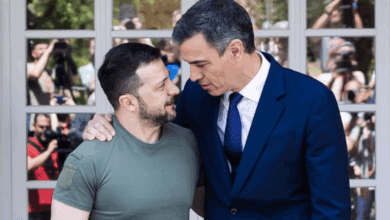
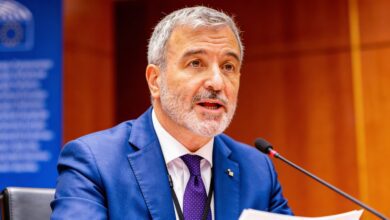
Spain’s decision not to join the French initiative to expand nuclear capability has sent an unexpected signal across Europe. For Spaniards, this means the country maintains its course of staying out of the arms race, despite mounting pressure from EU partners. This move could shift the balance of power in the region and fuel debates about the future of security on the continent.
Madrid’s stance
Prime Minister Pedro Sánchez made it clear that Spain will not support France’s plans to increase its nuclear arsenal. According to him, Madrid is not interested in a world where nuclear weapons are becoming increasingly widespread. Sánchez reminded that a recent international agreement limiting the proliferation of nuclear arms has expired and noted that global tensions are growing as the number of warheads rises.
In an interview with elDiario.es, the head of government emphasized that Spain advocates for new negotiations among the world’s leading nuclear powers. He believes only dialogue can lead to a new agreement capable of containing the further spread of dangerous technologies. According to elDiario.es, Madrid does not intend to change its position even under allied pressure.
The French Initiative
Paris, by contrast, announced a shift to the concept of ‘advanced deterrence.’ This strategy involves conducting joint exercises with European partners and deploying elements of France’s strategic forces on the territory of other countries. President Emmanuel Macron also revealed plans to increase the nuclear arsenal, while refusing to disclose the exact number of warheads.
France’s policy has sparked mixed reactions among European states. Some countries expressed concern about the potential for increased tensions and the risk of a new arms race. Spain was among the first to openly oppose this course, which could influence further decisions by other EU members.
Implications for Europe
Madrid’s refusal to take part in France’s nuclear initiatives could shift the balance of power in European security policy. According to russpain.com, this move may strengthen the position of disarmament advocates and prompt new arms control talks. At the same time, disagreements among EU countries on defense issues could complicate efforts to develop a unified strategy amid growing threats.
Experts note that Spain’s decision could set an example for other countries seeking to reduce nuclear risks. However, the lack of unity within the European Union on such an important issue may lead to new challenges for regional stability. In the coming months, diplomatic contacts between countries are expected to intensify in search of a compromise solution.
Context and related events
In recent years, Europe has already faced attempts to revise its security strategies. After the United Kingdom left the EU and relations with Russia worsened, defense and nuclear deterrence issues have become the subject of heated debate. Previously, Germany and Italy also raised doubts about expanding nuclear programs in Europe. In 2024, similar debates have erupted over the deployment of U.S. weapons in certain EU countries. These events show that the issue of nuclear capability remains one of the most controversial and sensitive for the European community.