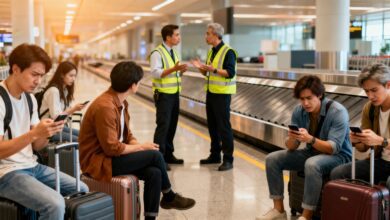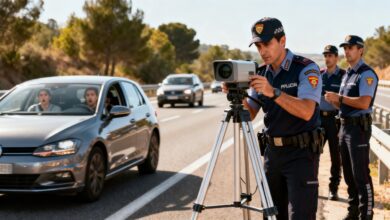
In Madrid’s subway, a real game of hide-and-seek plays out every day between passengers and ticket inspectors. Despite all efforts by the transport company, thousands of people still find ways to board trains without paying a cent. New turnstiles, surveillance cameras, and even dedicated messaging groups are all just part of a bigger standoff, where not only money but public trust in the system is at stake.
In recent years, Spain’s capital has seen an interesting trend: the number of fare-dodgers is decreasing, but the scale of the problem is still striking. Ten years ago, metro authorities recorded over 47,000 violations a year; now, that figure has dropped to around 17,000. However, unions insist the actual number sneaking in without tickets is much higher. By their estimates, about 40,000 people skip fares every day—roughly 1.6% of all passengers.
Secret group chats
Modern technology is increasingly being used to evade ticket checks. On Telegram, there are open groups where members warn each other in real time about inspectors at metro stations. Messages like “Inspection at the Atocha entrance” or “Heads up, inspectors at Parque de las Naciones” appear daily. Off-topic discussions are strictly forbidden—only updates about ticket checks and tips for getting through unnoticed are allowed.
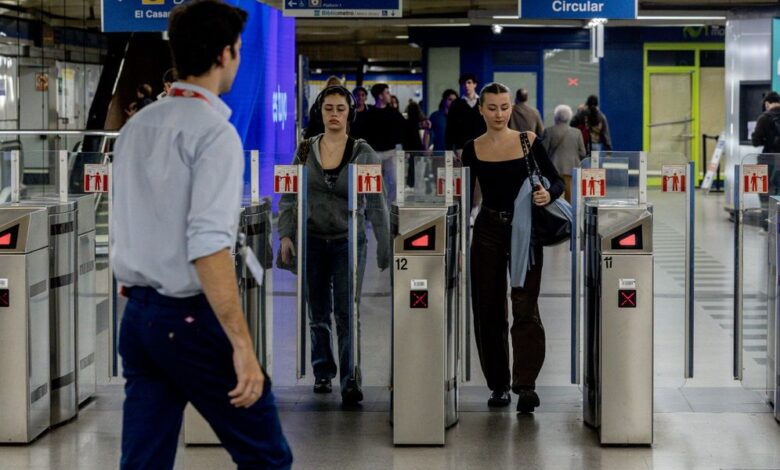
Fifteen minutes of observation at Sol station—and already several people deftly slip behind others or leap over turnstiles. The new “smart” gates were supposed to make this harder, but passengers’ ingenuity knows no bounds. Sometimes it’s enough to simply stick close to the person in front to sneak through unnoticed.
Numbers and controversy
Official statistics only count those caught red-handed. But subway staff and unions insist the real numbers are much higher. According to their estimates, 33 fare dodgers slip into the Madrid Metro every minute. This isn’t just a direct loss for the transport company—it’s a constant source of frustration for those who pay their fare.
According to employees, the main reason is staff shortages. Many stations have just one employee on duty, and secondary entrances are often completely unattended. The situation is somewhat better at major transfer hubs, but even there it’s impossible to watch all the passenger flows. As a result, unions estimate that every day about 50 to 60 stations remain at least partially unsupervised.
Fines and consequences
Those who do get caught face a fine of €80. However, employees note that this does not always deter offenders. Some people knowingly take the risk, banking on the fact that the chances of getting caught are slim. Moreover, when conflicts arise between passengers or there are issues with tickets, staff often have to call colleagues from neighboring stations. By the time help arrives, the situation may have already escalated.
In recent years, the metro management has been focusing on automation. New monitoring systems are being implemented, and the number of cameras is increasing—there are now more than 9,000 across the network, with 5,000 located directly in stations. In the coming years, millions more euros are planned to be invested in developing security and surveillance systems.
Technology vs Ingenuity
Experiments with ticket barriers are ongoing. Several years ago, some stations tried keeping the doors open, closing them only if someone attempted to enter without a ticket. But this approach was quickly abandoned in favor of the classic model: gates remain closed and only open after a ticket is validated. In 2019, the first ‘smart’ turnstiles appeared at Gran Vía station, and now they can be found at dozens of locations across the city.
Officially, these innovations are introduced for passenger convenience and safety. However, many believe the main goal is still to tackle fare evasion. Despite continuous efforts, the problem has yet to be fully resolved. Passengers are becoming more inventive, while metro staff complain about constant understaffing and work overload.
Night hours and new challenges
The problem is especially acute at night. Previously, secondary entrances closed around 21:40, but now they remain open until 2 a.m. Meanwhile, staff are rarely present at these entrances. Management insists that safety is ensured through cameras and remote monitoring, but employees on site disagree.
All this creates an atmosphere of distrust and irritation. Honest passengers feel deceived, while violators act with impunity. As some look for new ways to bypass the system, others demand the return of human oversight and more staff at stations. The question of who will win this race—technology or human ingenuity—remains open.