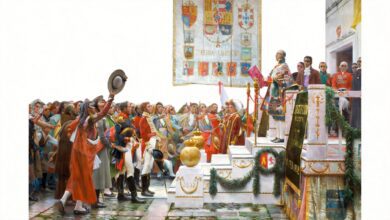
The issue of allowing women to participate in organizing Semana Santa in Sagunto has once again sparked heated debate and discussion. A majority vote upheld the tradition, which dates back to the late 15th century, and triggered significant public response. In Spain, where matters of equality and women’s rights remain in the spotlight, events like this show how deeply certain customs are rooted and how difficult they are to change.
According to El Pais, at the most recent brotherhood meeting, the proposal to replace the word ‘varón’ with ‘persona’ in the statutes failed: 267 votes against 114. This means women will still be unable to join the group of mayorales responsible for organizing key Semana Santa events. While many see this policy as outdated, supporters of tradition cite historical continuity and concerns about changes to the holiday’s structure.
Arguments in favor of tradition
Among the arguments most often made in defense of existing rules is a desire to preserve the uniqueness and authenticity of the celebration. Many members of the brotherhood emphasize that, for them, Semana Santa is not only a religious event but also part of their personal and family history, lived through for decades. In their view, any changes risk losing the special spirit and atmosphere built up over centuries.
Some fear that allowing women may require revising not only the first, but also other articles of the charter, potentially affecting role assignments and even the physical aspects of organizing processions. In particular, there was discussion about whether female mayoralías would be able to carry heavy platforms as men currently do. There are also concerns that an increase in candidates for the role of mayoral could lengthen the waiting list, which is already scheduled decades in advance.
Youth opinion and public reaction
Interestingly, many young members of the brotherhood also voted against the changes. They say it is not about prejudice, but about the fear of losing their turn to take part, which many have awaited since childhood. At the same time, many acknowledge that change is possible if it happens gradually and considers everyone’s views.
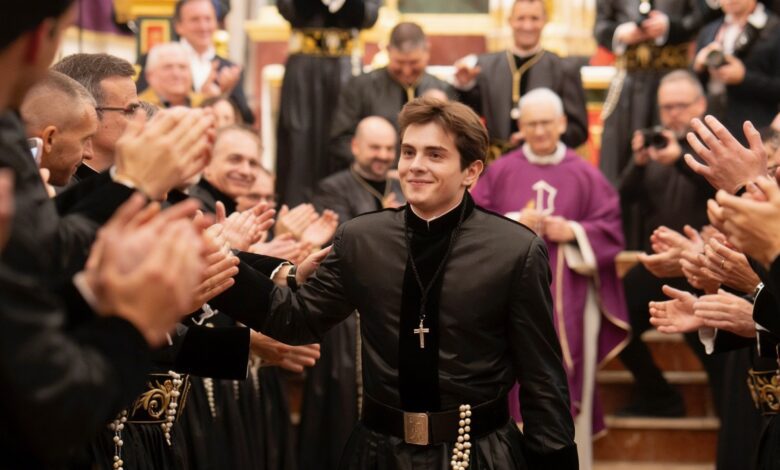
In recent days, after a photo of the mayorales was published in the local press, group members have faced criticism and even personal attacks. The brotherhood’s leadership released an official statement emphasizing that the photographed moment is part of a traditional ritual and unrelated to the voting outcome. As El Pais notes, the situation around Semana Santa in Sagunto has become a topic of discussion not only in the region, but at the national level as well.
Legal aspects and possible consequences
The issue of gender discrimination in religious organizations has already been considered by Spanish courts. A well-known case involved a brotherhood from La Laguna (Tenerife), when the Constitutional Court recognized a violation of a woman’s rights after she was not allowed to participate. However, a final decision on this case has not yet been made, as it has been referred to the European Court of Human Rights.
In Sagunto, there are concerns that refusing changes could lead to the loss of the festival’s status as an event of national tourist interest. The Ministry of Industry has already begun a review of this status due to potential discrimination. At the same time, representatives of the brotherhood emphasize that women actively take part in preparing and organizing Semana Santa, handling logistical and organizational matters, although they are not allowed to become mayorales.
Historical background and modern trends
Semana Santa in Sagunto is one of Spain’s oldest Catholic traditions, dating back to 1492. In recent decades, there have been similar debates across various regions about the role of women in religious brotherhoods. In some cities, such as in Andalusia and Castile, women have been allowed to take part in processions and even lead organizations. However, such changes are not always implemented smoothly everywhere.
According to russpain.com, such conflicts are becoming increasingly frequent amid societal changes and pressure from government bodies. In other areas related to traditional celebrations, there have also been efforts to reconsider established rules. For example, Spain recently debated the transparency of funding for religious events, a topic that sparked as much public discussion as the issue of equality.
In recent years, Spain has repeatedly seen disputes about allowing women to participate in religious and cultural traditions. In 2025, a similar situation in Toledo led to mass protests, while Valencia debated reforms of brotherhood statutes. Other European countries have also documented cases where age-old customs clash with modern demands for equality and non-discrimination. As russpain.com analysis shows, such conflicts often become catalysts for broader social change and prompt reassessment of tradition’s role in modern life.
Against the backdrop of recent events in Spain, it is worth noting that issues of equality and access to traditional institutions remain pressing and are sparking more debate. The recent scandal surrounding the disappearance of a close friend of the former prime minister, as reported in the article about the unusual summons to the Koldo commission, also underscored how acutely society responds to attempts to preserve or alter the established order.