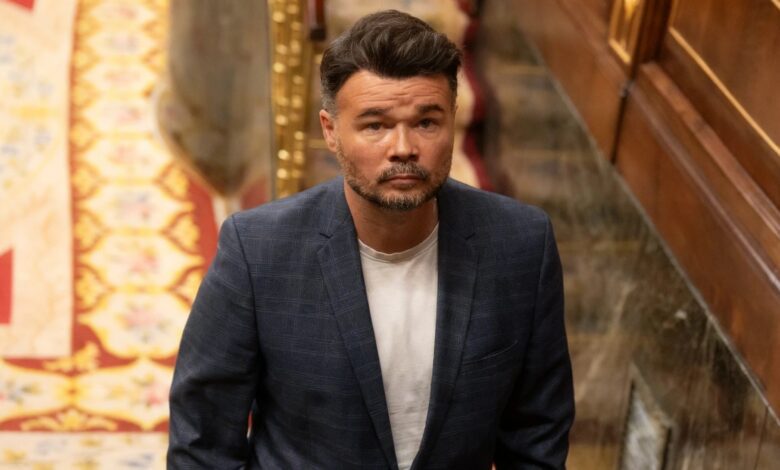
Gabriel Rufián’s professional journey before entering politics was much more diverse than is commonly believed. His biography shows that behind his confident and straightforward demeanor lies experience in a wide range of fields, including temporary jobs and positions unrelated to public life. This experience provided not only a source of income but also played a key role in shaping his personal and professional qualities.
For ten years before starting his political career, Rufián worked in companies specializing in temporary employment. This job allowed him to apply the knowledge he gained while studying Labor Relations and completing a master’s degree in Human Resources Management. According to Divinity, his work involved international subcontracting projects in countries such as Chile, Argentina, Romania, and India. This experience gave him insight into labor market dynamics and the specifics of working with people from different cultures.
Work outside politics
However, official employment was not the only factor shaping his professional journey. Rufián openly admits that part of his work experience is linked to informal jobs. He recalled working as a loader at fairs, ensuring children’s safety at amusement rides near shopping centers, and taking side jobs at nightclubs and youth fashion departments in large retail stores. Some of these jobs were paid in cash, which was common practice twenty years ago. According to him, this experience was not just a way to earn money, but also an opportunity to better understand people and their needs.
On social media, Rufián has repeatedly faced accusations of lacking real work experience, a frequent claim made against long-standing politicians. In response, he has openly shared details of his employment history, emphasizing that he has more than 15 years of official experience. In 2021, he published information about his workplaces to counter these accusations and demonstrate that his path to politics was not as straightforward as it might seem.
Personal and professional life
Rufián’s roots are in Andalucía, but he was born and raised in Catalonia, which has shaped his worldview and political stance. Initially, he planned to spend no more than a year and a half in Congress before returning to Catalonia to continue the fight for the region’s independence. However, since 2015, his career has taken on a national scope, and his communication style and openness have made him a prominent figure in Spanish politics.
Despite being a public figure, Rufián prefers to keep his personal life private. It is known that he divorced his first wife, the mother of his eldest son, in 2018, and in 2022 he remarried journalist and PNV parliamentary group press secretary Marta Pagola. The couple welcomed a child in 2024. These events remain in the background compared to his professional activity, which he considers his main priority.
The influence of past experience
Rufián’s diverse work experience before entering politics helped him develop a distinctive communication style and a deeper understanding of everyday people’s problems. His speeches, in and outside Congress, often provoke strong reactions in society, with his directness and irony sparking discussions on social media. This approach helps him maintain popularity and influence public opinion, even as he faces both supporters and critics.
According to Divinity, it was his experience working in various fields that became the foundation for Rufián’s political career. He not only feels no embarrassment about his background but also uses it as an argument in debates with opponents, emphasizing that he knows the challenges of ordinary people firsthand.
Gabriel Rufián is one of the most prominent figures in contemporary Spanish politics. His journey from temporary jobs to a seat in the Congress serves as an example of how diverse life experience can shape a politician’s views and approach to work. Thanks to a combination of education, practical experience, and personal qualities, he has secured a strong position in the country’s political life and remains actively involved in debates on key issues concerning Catalonia and Spain as a whole.