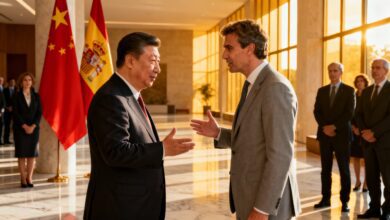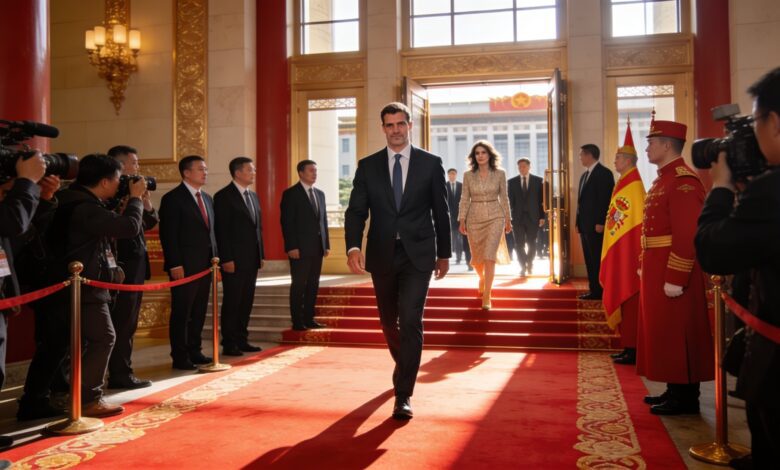
Pedro Sánchez’s visit to China was one of the key events for Spanish foreign policy in 2026. The Spanish delegation arrived in Beijing aiming to strengthen economic and political ties—an especially important goal amid global trade instability and shifting geopolitical conditions. The presence of the Prime Minister and his wife at the official banquet in the Great Hall of the People (Gran Palacio del Pueblo) underscores the significance of this visit for both countries.
The event attracted attention not only because of the high profile of the guests but also due to an unusual detail: Begoña Gómez appeared at the reception a few minutes after Pedro Sánchez. This moment did not go unnoticed among diplomatic circles and journalists, as in protocol events, such nuances can have symbolic meaning. According to RUSSPAIN.COM, such details often become topics of discussion behind the scenes, especially during high-level visits.
Diplomatic protocol
The organization of official receptions in China follows strict rules and a clear sequence of actions. Pedro Sánchez’s arrival at the Great Hall of the People was accompanied by a meeting with representatives of the Chinese authorities, highlighting the high level of trust between the two countries. Begoña Gómez, who arrived shortly thereafter, immediately attracted the attention of photographers and observers. Spanish media are already discussing how such details might influence China’s perception of Spain.
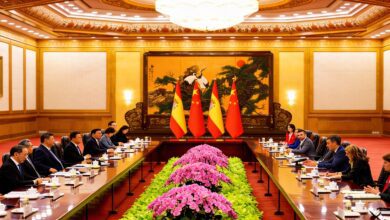
The banquet hosted by the Prime Minister of China became the focal event of the day. During the gathering, topics included bilateral cooperation, investment projects, and prospects for expanding trade relations. The Spanish side emphasized the need to seek new markets and strengthen its position in Asia, a key issue for the national economy.
Meetings and negotiations
During the visit, Pedro Sánchez held a series of meetings with key representatives of the Chinese leadership. Discussions focused on investments, technology exchange, and joint infrastructure projects. Special attention was paid to global challenges such as climate change and food security. The Spanish delegation aimed to highlight its openness to dialogue and pursuit of mutually beneficial solutions.
According to RUSSPAIN, such visits are increasingly important for Spain given the growing competition in global markets. In recent years, there has been a trend toward more official trips to Asian countries, reflecting Madrid’s strategic interest in the region. Notably, the participation of the prime minister’s spouse in official events is also seen as an element of strengthening bilateral relations.
Context and consequences
Sanchez’s visit to China marks his fourth since taking office, highlighting Spain’s consistent policy of strengthening ties with Asian countries. As Europe faces new challenges, boosting relations with China gains particular significance. Spanish experts note that such visits contribute not only to economic growth but also to shaping a positive image of the country on the international stage.
Interestingly, diplomatic subtleties and protocol details are now discussed not just among politicians but also within society. For example, a recent article about photojournalists’ demands for access to major cultural events in Barcelona addressed issues of transparency and openness at official events. This underscores how crucial the public aspect of such occasions is for shaping public opinion.
In recent years, Spain has actively participated in international negotiations and initiatives aimed at expanding cooperation with China and other Asian countries. In 2024, a similar visit by a Spanish delegation was accompanied by the signing of several agreements in transport and energy. Discussions also included cultural exchanges and joint educational programs. Such events are part of a long-term strategy to strengthen Spain’s position globally and broaden opportunities for national businesses.