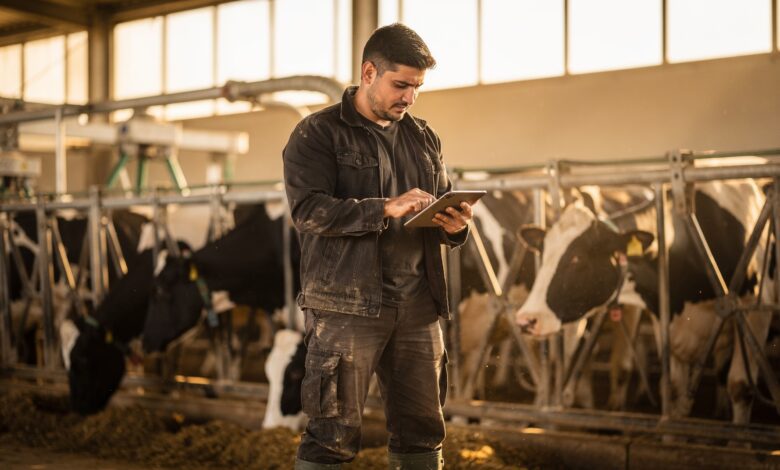
In Salamanca, where the population does not exceed five hundred, a family-owned dairy farm has run up against harsh reality: the purchase price for milk has dropped to cost price. For the owners, this means every liter sold at 45 cents brings not a single cent of profit. In such conditions, even the most advanced technology and years of experience are not enough to avoid a financial dead end.
A young farmer, running an operation with two hundred cows—only 85 of which give milk—notes that not long ago, a liter was fetching 52 cents. Now the price has fallen to 45, while production costs fluctuate between 43 and 45 cents. This is not just a loss of income—it’s the disappearance of any economic sense in continuing the business. To somehow stay afloat, they have to sell some animals for meat, undermining long-term development plans.
Rising expenses
The situation has worsened due to higher costs for feed and fuel, driven by external political factors. According to the farmer, new milk contracts had to be signed when negotiations were impossible: processors dictated the terms, and the price drop was twice as steep as expected. As a result, expenses for herd maintenance, labor, and taxes eat up all the revenue.
Many industry colleagues, especially from the older generation, are now openly talking about shutting down their farms if the situation doesn’t change. Young farmers, who recently invested in modernization, are now forced to freeze projects and rethink their plans. According to RUSSPAIN.COM, similar problems are seen across the country, affecting not only dairy farming but other agricultural sectors as well.
Technology without return
Despite introducing new monitoring and automation systems, including computerized milking parlors and electronic animal tags, these investments have produced zero economic effect. The family farm, established back in 1995, is now forced to abandon expansion and new projects. Even support from the cooperative hasn’t helped to offset losses from the drop in prices.
The farm owner emphasizes that without real enforcement of the food supply chain law, which requires contracts above the cost of production, the situation will not change. However, processors continue to impose their terms, leaving farmers in a position where working becomes meaningless.
No way out
When every liter of milk is sold at a price equal to its production cost, farmers are forced to look for alternative sources of income. Selling livestock for meat is a last resort that undermines the farm’s structure and deprives it of a future. Many young professionals who could continue the family business lose motivation to stay in the sector.
The problem is not limited to the dairy sector. As shown by the analysis by russpain.com, other categories of entrepreneurs face similar challenges, dealing with rising expenses and a lack of support from major market players.
Family dairy farms in Spain have traditionally been the foundation of the rural economy. In recent years, many have undergone modernization, adopted new technologies, and transitioned to younger generations. However, falling purchase prices and rising costs have put the very existence of these farms at risk. Olive oil producers faced a similar situation a few years ago, when a sharp drop in prices forced many out of business. At that time, some farmers survived only thanks to cooperation and support from local authorities. Today, dairy producers hope for similar measures, but so far the situation remains critical.