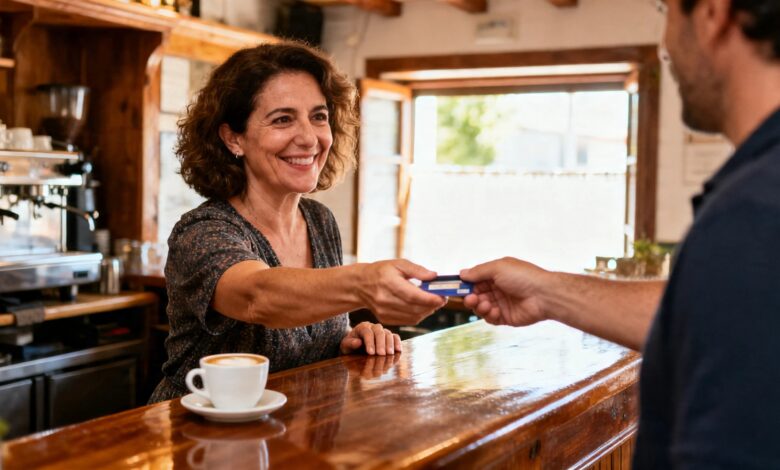
In Galicia, more and more owners of small bars and cafés are refusing to accept bank cards in order to avoid losing profit on low-priced drinks. This decision is driven by bank fees for each transaction, which can eat into the already modest earnings from selling coffee, water, or beer. For many establishments, it has become a matter of survival rather than just convenience for customers.
The situation has intensified as electronic payments become more popular. According to RUSSPAIN.COM, over 80% of shoppers in Spain prefer to pay by card or through mobile apps. However, for bar owners whose average bill rarely exceeds a couple of euros, even a small fee makes each sale almost symbolic. As a result, some entrepreneurs, as noted by Talent24h, choose to trust regular customers and let them have coffee ‘on credit’ rather than lose money on fees.
Customer reaction
Interestingly, most patrons react calmly to the refusal to accept cards. Bar owners say that regular customers understand the reasons and do not complain. If someone doesn’t have cash, the owners simply suggest paying next time. This approach fosters trust between the venue and its guests, and also helps retain a loyal clientele.
At the same time, new customers are sometimes surprised by the absence of a card terminal, but after the reasons are explained, they usually don’t object. Some even support the decision, considering it fair to small businesses. In Galicia, signs warning that only cash is accepted are already appearing, and this practice is becoming increasingly common.
The micro-payment economy
For bar and café owners, commission fees are not just an annoyance but a real threat to their business. With a coffee costing €1.30, after deducting VAT, utilities, rent, and product costs, the profit is minimal. If you add bank fees to that, the income nearly disappears. In these circumstances, many entrepreneurs feel it’s easier to stop accepting electronic payments altogether rather than operate at a loss.
Some establishment owners are urging banks and authorities to reconsider fee policies for micro-payments. They believe special conditions should be in place for small businesses, or else traditional bars and cafés could simply vanish. For now, compromise is necessary—some limit card payments to larger sums, while others have switched back entirely to cash.
Pressure from digitalization
Despite pressure from banks and the government, who actively promote electronic payments, small businesses in Spain’s regions are increasingly going against the trend. For many bar owners, giving up card terminals is a forced measure rather than stubbornness. They are not against progress but want their real needs and capabilities to be considered.
The issue of fees on micropayments is already being discussed by professional associations. Some experts believe that without reform, small establishments will be at a disadvantage compared to large chains. For now, bar owners have to choose between customer convenience and their own survival.
In recent years, Spain has seen similar cases where owners of small shops and cafés stopped accepting cards en masse due to high fees. The problem has been especially severe in rural areas and small towns, where turnover is low and every euro counts. At the time, entrepreneurs also approached banks asking to reduce micropayment fees, but so far no significant changes have occurred. This trend shows the issue remains relevant and needs a systemic solution.