In Spain, owners of small plots are increasingly facing an unexpected problem: most popular trees either take up too much space or their roots damage walkways and tiles. This issue is especially noticeable in cities, where every square meter counts. Against this backdrop, the pomegranate has become a real find for those who want shade, a green corner, and a harvest without extra hassle.
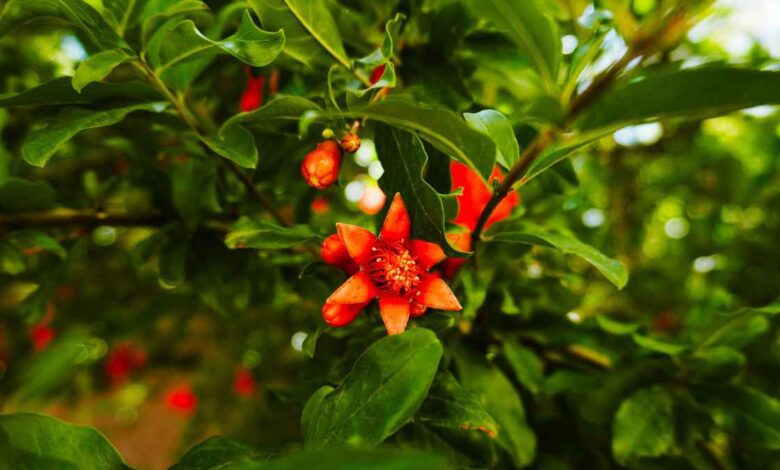
The pomegranate (Punica granatum) is not only compact, but it also handles heat and drought very well, which is especially important for the southern regions of the country. It can even be grown in large pots without worrying that the roots will lift tiles or damage the foundation over time. According to Talent24h, the tree doesn’t require constant attention: a sunny spot and well-drained soil are enough to yield juicy fruit by late summer or early autumn.
Advantages of pomegranate
The pomegranate stands out from other fruit trees because its root system develops slowly and doesn’t seek to expand beyond its allotted space. This allows it to be planted even close to the house or on narrow plots without concerns about unpleasant surprises in a few years. The tree rarely grows taller than four meters, and with regular pruning, it stays even lower, making harvesting and maintenance convenient.
Unlike olive or lemon trees, pomegranates do not require frequent watering and can easily withstand periods of drought. Even during the hot Spanish summer, moderate watering is enough for the tree to keep its leaves and continue growing. According to russpain.com, this is one of the most low-maintenance fruit trees for urban environments.
Care without hassle
To ensure pomegranate trees bear fruit consistently, just follow a few simple rules. First, choose the sunniest spot possible for planting. Second, make sure water does not accumulate around the roots—excess moisture can lead to disease. Third, avoid planting the tree too close to walls or pathways, leaving at least half a meter of free space.
Pruning is done at the end of winter: remove dry and crossing branches to encourage new shoots to grow. In spring, a little fertilizer may be added, but pomegranates do not need complex feeding. During hot spells, increase watering but avoid overwatering. In winter, the tree rarely needs water, which is especially convenient for busy owners.
Alternatives for small gardens
Despite the clear advantages of the pomegranate, some prefer other compact trees. For example, plums adapt well to small plots, have a non-aggressive root system, and produce sweet fruit in summer. The dwarf níspero (loquat) blooms in winter and bears fruit by spring—a rarity among fruit trees. Its shallow roots require minimal care.
Miniature citrus trees such as lemon or orange are also suitable for growing in large pots. They require more frequent watering but reward you with their fragrance and bright fruit. The olive tree remains a Spanish classic: it tolerates drought, does not grow too large in a container, and eventually bears fruit, although not as quickly as the pomegranate.
Choosing a tree for a small yard or garden depends on personal preferences and the specific conditions of the site. However, the pomegranate stands out as a leader thanks to its compact size, heat resistance, and reliable annual harvest.
The pomegranate is an ancient plant known in the Mediterranean since antiquity. Its fruit is valued not only for its flavor but also for its high vitamin and antioxidant content. In recent years, there has been growing interest in this tree among city dwellers in Spain who are looking for simple ways to green their courtyards and balconies. A similar trend has been observed in Italy, where pomegranates are increasingly used in the landscaping of small spaces. This attention to Punica granatum is due to its versatility and ability to adapt to various conditions, making it an ideal choice for modern urban gardens.