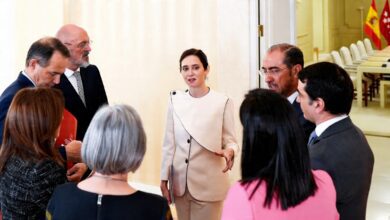
Spain continues to debate a case that involves not only politicians, but the entire judicial system. For two years, the investigation against the wife of the current prime minister has produced no concrete results, despite persistent efforts to find grounds for charges. This situation raises questions about the transparency and effectiveness of the judiciary, as well as how such processes affect trust in government institutions.
The judge handling the ‘Caso Begoña Gómez’ recently clarified the accusations against Begoña Gómez, her assistant, and a businessman who worked with her on a project at Universidad Complutense de Madrid. They face four charges: undue influence, embezzlement, misappropriation of funds, and private sector corruption. However, as El Pais notes, throughout the investigation, not a single fact has been found to confirm the existence of a crime. The judge has repeatedly shifted his stance, ignored recommendations from higher authorities, and shown personal interest, which has drawn criticism from experts.
Features of the Spanish system
Spain still retains the institution of the investigating judge, which sets it apart from most of its European neighbors. This is linked to a historical distrust of the prosecutor’s office, which is often seen as dependent on the executive branch. The investigating judge has significant powers during the investigative phase, which sometimes leads to abuse. In this case, according to experts, the excessive independence of the judge was the main reason for the drawn-out and ambiguous process.
In addition, there is a tendency in Spain to view any actions of public officials through the lens of criminal law. If an event is not classified as a crime, it often fails to spark public debate or lead to political consequences. This creates a situation where investigations become a tool of pressure rather than a means of objectively establishing the circumstances.
Questions about the evidence
The case files do not contain concrete information about any benefit Begona Gomez could have received or how she might have influenced university decisions. It is also unclear who could have committed embezzlement or misappropriation of funds, given the vague duties of the assistant and the lack of clear legal grounds. Attempts to classify software as a misappropriated asset raise doubts among experts, and accusations of corruption in the private sector are not supported by facts regarding specific companies.
According to El Pais, the investigation appears more like a search for grounds to press charges than an objective review of the situation. Similar cases have already sparked discussion in Spanish society. For example, a court in Almería recently launched a probe into alleged misuse of budget funds by a former Diputación head, which also stirred debate over the limits of liability and the court’s role in overseeing officials’ actions. More details can be found in the article about the investigation in Almería.
Context and consequences
In the ‘Caso Begoña Gómez’, particular attention is drawn to the conduct of certain state officials. Specifically, the involvement of a public university rector in negotiations with the prime minister’s wife raises questions about the permissible scope of official duties and ethics. However, despite some contentious aspects, no legal grounds for prosecution have been found.
The situation surrounding this case reflects a broader issue: in Spain, there is often a lack of effective public oversight mechanisms for government actions, and any suspicions are promptly turned into criminal proceedings. As a result, even minor incidents become grounds for large-scale investigations, which rarely lead to actual charges.
In recent years, Spain has repeatedly seen high-profile cases involving alleged corruption and abuse of power among senior officials. However, most of these cases have ended without serious consequences for those involved. This practice leads the public to perceive the system as ineffective and fuels growing distrust in judicial and political institutions. As each new scandal sparks public debate, the role of judges and transparency in their decisions become especially important.