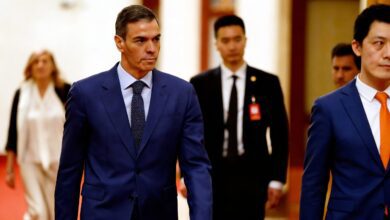
Pedro Sánchez’s visit to Beijing became one of the key events for Spain’s foreign policy in 2026. Amid complex relations with the US and growing uncertainty in Europe, Madrid is seeking new ways to strengthen its position. The meeting with Xi Jinping in the heart of the Chinese capital not only highlighted the importance of bilateral ties but also positioned Spain as one of China’s main partners in the European Union. According to El Pais, both sides openly discussed the challenges facing the international order and expressed readiness to jointly address threats related to breaches of multilateral principles.
High-level dialogue
During the talks at the Great Hall of the People (Gran Salón del Pueblo), Xi Jinping emphasized that Spain and China share similar moral values and aim to act in the interests of stability. The Chinese leader called on Sánchez for joint efforts against the ‘law of the jungle’ in global politics and for strengthening international law. Pedro Sánchez, in turn, stressed that Spain is ready to be a predictable and bold partner, able to defend European interests and support the balance between East and West. Notably, both sides expressed the intention to deepen cooperation not only bilaterally but also within the broader framework of China-EU relations.
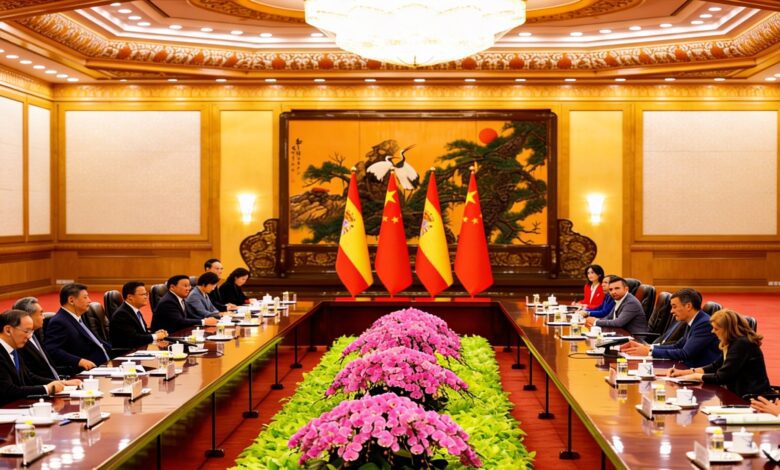
The meeting was marked by a particularly solemn atmosphere: delegations from the two countries sat at a long table, and the hall was decorated with the flags of Spain and China. Despite the formal protocol, the leaders exchanged friendly gestures, which observers believe demonstrates genuine interest in developing a partnership. As noted by El Pais, Xi Jinping specifically highlighted Spain’s role as a bridge between China and Europe, while Sanchez acted not only as a national leader but also as a representative of Europe.
Impact on Europe and Business
Special attention during the meeting was given to issues of economic cooperation. In China, all major investment decisions go through state structures, making personal contacts at the highest level crucial for future projects. The Spanish delegation, which included Foreign Minister Jose Manuel Albares, expects that the agreements reached will simplify access for Spanish companies to the Chinese market and boost cooperation in technology and innovation. According to russpain.com, such visits could be a catalyst for new export and investment agreements, especially as competition among EU countries for Beijing’s attention intensifies.
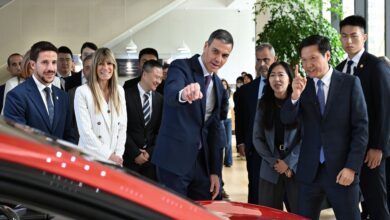
Before meeting with Xi Jinping, the Spanish Prime Minister held talks with representatives of Chinese businesses and visited several key enterprises. The official agenda also included meetings with Zhao Leji, Chairman of the Standing Committee of the National People’s Congress, and Premier Li Qiang, underscoring the scale and importance of the trip. According to El Pais, the Spanish side views these engagements as strategic for strengthening Madrid’s position in Asia and boosting the competitiveness of the national economy.
Spain positions itself as a European mediator
In recent years, Spain has increasingly acted as a mediator between China and the European Union, offering alternative formats for dialogue and cooperation. Chinese media, particularly the Global Times, note that Madrid demonstrates flexibility and a willingness to seek compromises, setting it apart from other European capitals. An editorial highlights that the Spanish approach could serve as a model for shaping new relations between China and Europe. In this context, Sánchez’s visit is especially significant, as it comes during a period of tension between Spain and the United States, as well as domestic political challenges for the Spanish government.
Interestingly, amid official events, the media also focused on the Prime Minister’s personal life: Pedro Sánchez’s wife, Begoña Gómez, learned about her procedural status during the trip. However, as El Pais notes, this did not affect the course of negotiations or alter the delegation’s plans. Overall, Sánchez’s visit to Beijing marked a continuation of the policy to diversify foreign relations, as previously detailed in the report on strategic changes in Spain-China relations.
In recent years, Spain has been actively expanding cooperation with China, despite pressure from other Western partners. In 2024 and 2025, Madrid has already hosted several Chinese delegations, while Spanish companies have increased exports to China. Analysts note that such visits promote not only economic growth but also strengthen Spain’s political influence in Europe. Amid global changes and new challenges for the European Union, Madrid’s role as a mediator between East and West is becoming increasingly prominent. In the coming months, new initiatives are expected to develop joint projects in technology, energy, and education.