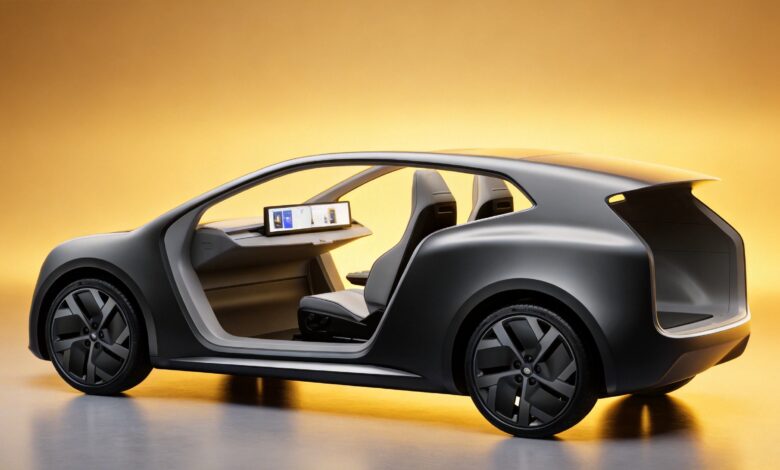
Lucid has made a bold move in urban transportation by unveiling the Lunar prototype—a two-seater electric vehicle entirely devoid of traditional controls. With no steering wheel or pedals, this concept clearly signals the company’s expectation for a near-future shift to fully autonomous transport, where drivers become unnecessary. This vision could transform how we think about taxis and also impact automakers’ revenue models, as they increasingly seek new ways to monetize their technologies.
Unlike competitors who are cutting back on autonomy investments, Lucid continues to move forward. During a recent Investor Day, the company not only showcased Lunar but also revealed details of an upcoming subscription for advanced autonomous driving features. Starting in 2027, Lucid owners will be able to activate DreamDrive Pro for a monthly fee between $69 and $99, depending on the chosen autonomy level. This strategy turns software into a standalone revenue stream—a growing trend in the electric vehicle market.
Technology and capabilities
Technical details about the Lunar are still limited, but the announced specifications are impressive. Lucid promises efficiency from 9 to 9.6 kilometers per kWh, which, under optimal conditions, translates to a range of up to 644 kilometers. Fast charging can add 322 kilometers of range in just 15 minutes. The key to such performance is carefully engineered aerodynamics and a lightweight design. However, it remains unclear whether the Lunar will reach mass production, as the company is currently focused on launching a new line of midsize electric vehicles expected to hit the market soon.
Lucid openly states that it sees subscriptions for autonomous features as the main driver of revenue growth. According to RUSSPAIN.COM, this model has already proven effective in other industries and is now entering the automotive sector. Notably, Lucid’s platform is ready for fourth-level autonomy directly from the factory, even though such vehicles have not yet been introduced to the public. The company is also in talks with Uber to jointly use its platform for robotaxi services, which could further boost the development of this area.
Plans and timelines
Lucid has set a clear timeline: the company plans to introduce hands-free driving on highways this year, followed by expansion into urban environments next year. By 2028, the goal is to achieve Level 3 autonomy, where the driver must be ready to take control but the car handles most situations independently. By 2029, Lucid aims to reach Level 4, allowing occupants to fully hand over control to the vehicle. These ambitions are bold, especially considering that not all competitors are willing to go this far.
Alongside technological advances, the electric vehicle market is also evolving in terms of pricing. For example, new government programs and discounts have already made electric cars more affordable for buyers in Spain, increasing competition among manufacturers and driving the adoption of innovations.
Partnerships and prospects
A key part of Lucid’s strategy is cooperation with transportation services. The compact two-seater Lunar is designed to maximize luggage space, which is especially valuable for city taxis and delivery services. Negotiations with Uber could result in new transportation formats, where autonomous electric vehicles operate around the clock without drivers. This approach may lower ride costs and improve transport accessibility for residents of major cities.
At the same time, the widespread adoption of autonomous vehicles requires not only technical readiness but also changes in legislation, infrastructure, and public perception. Not all countries are prepared for such a leap, but the trend toward transport automation is becoming increasingly clear. By focusing on subscription models and autonomy, Lucid is taking a risk, but could gain a significant advantage if the market embraces these innovations.
Lucid is an American electric vehicle manufacturer that has quickly become a notable player in the global market. The company is recognized for its technological advancements in autonomous driving and energy efficiency. The Lunar prototype became the first publicly showcased vehicle without a steering wheel or pedals in Lucid’s lineup, highlighting the brand’s ambitions in the robo-taxi segment and subscription services. In the coming years, Lucid plans to expand its model range and introduce new levels of autonomy, emphasizing software solutions and partnerships with major ride-hailing services.