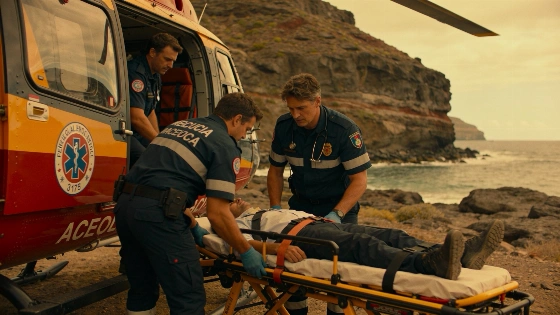
A 14-year-old boy drowned in a cove between Amadores and Puerto Rico. Emergency services, including a rescue helicopter, responded quickly but could not save him. The incident highlights ongoing risks along Gran Canaria’s coastline.
A 14-year-old boy lost his life on Tuesday after drowning in a secluded cove between Amadores and Puerto Rico, in the municipality of Mogán, Gran Canaria. The incident unfolded around 14:30, when the Centro Coordinador de Emergencias y Seguridad (Cecoes 112) received multiple calls reporting a person in distress in the water. The rapid escalation prompted authorities to deploy a coordinated emergency response, including the Grupo de Emergencias y Salvamento (GES), Salvamento Marítimo, the Gran Canaria Emergency Consortium, and local Protección Civil teams.
Rescue teams quickly arrived at the scene, with the GES helicopter crew locating the teenager underwater. He was pulled from the sea and airlifted to the Amadores helipad, where a Servicio de Urgencias Canario (SUC) ambulance was waiting. Despite immediate medical intervention, paramedics could only confirm the boy’s death after resuscitation attempts failed. The Guardia Civil took charge of the body and began judicial proceedings to clarify the circumstances surrounding the drowning, while Mogán’s local police supported the operation on the ground.
This tragedy comes amid ongoing concerns about water safety along Spain’s coasts. Similar incidents have drawn attention to the challenges faced by emergency services in responding to sudden accidents in remote or difficult-to-access locations. For example, a recent landslide in León that resulted in one fatality and injuries to two children also highlighted the critical role of coordinated rescue operations in life-threatening situations.
Gran Canaria’s coastline, especially in areas popular with both locals and tourists, is known for its hidden coves and variable sea conditions. While lifeguard coverage is extensive on main beaches, isolated spots often lack supervision, increasing the risk for swimmers. According to official data, drowning remains one of the leading causes of accidental death among young people in Spain, particularly during the warmer months when coastal activity peaks. Authorities continue to urge caution and recommend swimming only in designated areas with lifeguard presence. The incident in Mogán underscores the importance of rapid emergency response and the ongoing need for public awareness about the dangers of unsupervised swimming in natural environments.